“My license-free car costs me less than my wife’s subscription”
Julien, 34, lives in Châteauroux. He bought a combustion Ligier JS60 two years ago for his 8 km home-to-work trips. His wife has a diesel Renault Clio. At the end of the year, he does the math: 420 € of fuel for him, 1,850 € for her. Not counting insurance.
The running cost of a license-free car is its real strength. Not the speed, not the comfort, the cost. Here are the real figures, without embellishment.
Combustion license-free car: the reality of 3-4 L/100 km
Combustion license-free cars are fitted with single-cylinder petrol engines. The displacements vary by model and generation:
- 305 cc: older setups (Microcar, pre-2015 Ligier)
- 479 cc: fitted on many current models (Suzuki 0.5 supplied to Ligier, Aixam)
- 500 cc: certain upper-range models
These engines are optimized to run at a steady regime at low speed. In the typical urban and suburban use of a license-free car, real consumption swings between 3 and 4 L/100 km.
The factors that push it up:
- Intensive stop-and-go driving (dense city, many traffic lights)
- Frequent hills (engine under load)
- Vehicle load (a passenger represents 15 to 20% of the vehicle’s weight)
- An aging, poorly maintained engine
The factors that bring you close to 3 L:
- Smooth suburban trips
- A warm engine (the first kilometers use more)
- Anticipatory driving
Cost per kilometer, combustion
With SP95 at 1.85 €/L (average price observed in France in early 2026):
- At 3.5 L/100 km: 6.5 € / 100 km, or 0.065 € / km
- At 4 L/100 km: 7.4 € / 100 km, or 0.074 € / km
For 10,000 km/year (a typical license-free car user’s mileage): between 650 and 740 € of fuel per year.
Electric license-free car: 8-10 kWh/100 km in real use
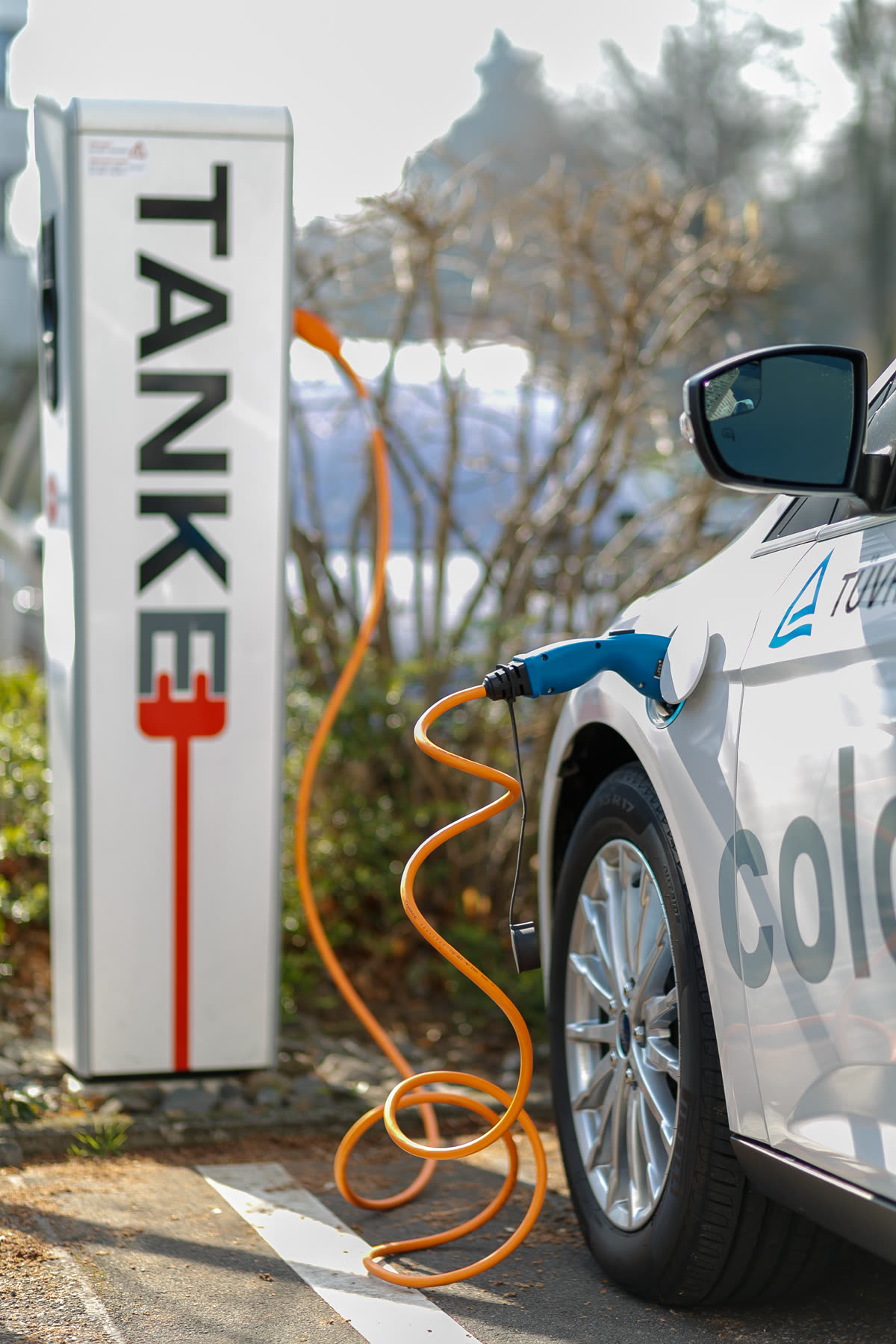
Electric license-free cars (Citroën Ami, Mobilize Duo, Aixam eCity, Ligier electric versions) carry batteries of 5 to 10 kWh depending on the model.
Real consumption sits between 8 and 10 kWh/100 km in normal conditions. This figure rises to 10-12 kWh/100 km in winter (heating + loss of battery capacity) and can drop to 7-8 kWh/100 km on a smooth suburban trip in summer.
The Citroën Ami (5.5 kWh, 75 km WLTP range) illustrates the reality well: users report a real range of 55 to 65 km in mild mixed use, which corresponds to about 8.5-10 kWh/100 km.
Cost per kilometer, electric
With a residential rate of 0.22 €/kWh (regulated base EDF rate, 2026 level):
- At 8 kWh/100 km: 1.76 € / 100 km, or 0.018 € / km
- At 10 kWh/100 km: 2.20 € / 100 km, or 0.022 € / km
For 10,000 km/year: between 176 and 220 € of energy cost per year.
Note: this calculation assumes home charging on a standard socket (the most common case for an electric license-free car whose battery charges in 3 to 4h on a household outlet). Charging at public stations is more expensive (0.40 to 0.60 €/kWh depending on the operator).
Comparison table: 10,000 km/year
| Combustion LF car | Electric LF car | B-segment city car (e.g. Peugeot 208 petrol) | |
|---|---|---|---|
| Consumption | 3.5 L/100 km | 9 kWh/100 km | 6.5 L/100 km |
| Energy cost / 100 km | 6.5 € | 1.98 € | 12 € |
| Energy cost / year (10,000 km) | 650 € | 198 € | 1,200 € |
| Average annual insurance | 300-500 € | 300-500 € | 700-1,100 € |
| Average annual maintenance | 200-350 € | 100-200 € | 400-700 € |
| Total running cost / year | 1,150-1,500 € | 598-898 € | 2,300-3,000 € |
Energy prices: SP95 at 1.85 €/L, electricity at 0.22 €/kWh. Maintenance estimated for a vehicle under 5 years old in normal use.
Savings vs a classic B-segment car: the real difference
The table above shows the gap in annual running costs. But the full comparison must include the purchase price.
Purchase price
A new license-free car costs between 8,000 and 16,000 € depending on the model and equipment (combustion or electric, trim level). A new classic city car: 18,000 to 28,000 €.
The gap at purchase is therefore 10,000 to 12,000 € in favor of the license-free car.
If we reason over 5 years of use:
- Savings on running costs: 5,750 to 7,500 € (annual cost difference × 5)
- Savings at purchase: 10,000 to 12,000 €
- Total savings over 5 years: 15,000 to 20,000 €
This calculation has its limits: resale value, financing, and limited use (a license-free car does not do the motorway). But for daily use in urban and suburban areas, the figures speak for themselves.
Insurance: a gap that is often underestimated
License-free car insurance costs 300 to 500 € per year for comprehensive coverage of a standard driver. It is cheaper than most regular cars for two reasons:
- The vehicle’s value is lower (theft/fire coverage is proportional to value)
- The 45 km/h top speed statistically reduces the severity of accidents
For a young driver or someone with a malus, the difference can be even more marked: a license-free car insured for basic third-party can cost 200 to 300 €/year, against 1,500 to 3,000 €/year for a classic car with a malus.
Maintenance: structurally low costs
Combustion
The single-cylinder engine of a combustion license-free car is mechanically simple. The common maintenance operations:
- Oil change: every 5,000 to 7,500 km, 80 to 120 € at a garage
- Timing belt: depending on the model, every 30,000 to 60,000 km, 150 to 250 €
- Brakes, filters, spark plugs: standard servicing, 150 to 200 €/year on average
The total annual maintenance cost of a well-maintained combustion license-free car comes to around 200 to 350 €/year.
Electric
An electric license-free car removes the oil change, the timing belt, the spark plugs. The costs concentrate on:
- Brakes (less worked thanks to energy recovery on some models)
- Battery replacement after 8 to 12 years (depending on the model, 2,000 to 5,000 €, a point not to overlook)
- Electronic checks, less frequent
The annual maintenance cost excluding battery replacement: 100 to 200 €/year.
The cases where a license-free car is not the right call
A license-free car is economically attractive under specific conditions. It is less so if:
- You make regular trips over 50 km (off the license-free car network, travel time too long)
- You need motorway access (impossible in a license-free car)
- Several adults often share the same vehicle (most license-free cars are 2-seaters)
For daily urban and suburban use up to 30-40 km per trip, a license-free car is hard to beat on total cost.
A GPS that optimizes your license-free car trips
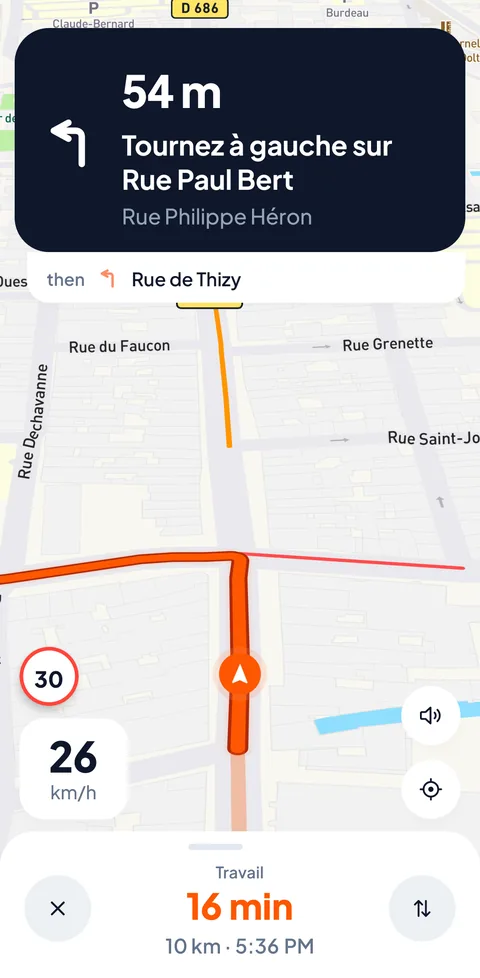
Saving on fuel or electricity also runs through smart routes: avoiding pointless stop-starts, taking smooth roads rather than congested arteries. A GPS calibrated for your license-free car, like TacTac, calculates routes at your real speed, not at 90 km/h like classic GPS apps, and steers you away from unsuitable roads that needlessly lengthen your trip.
Join the TacTac waitlist, for optimized license-free car trips, reliable ETAs, and fewer wasted kilometers.
FAQ
What fuel use should I expect for a combustion Ligier JS60?
In mixed use (city + suburban), between 3.5 and 4.5 L/100 km depending on the state of the engine, the route profile and the load. A well-maintained engine and smooth suburban trips let you get close to 3 L/100 km.
Is an electric license-free car really cheaper than a combustion one?
On energy cost alone, yes, by a factor of 3 to 4. The extra purchase cost of the electric model (generally +2,000 to 4,000 €) is paid back in 3 to 5 years depending on use. You also have to anticipate the long-term battery replacement.
Can a license-free car be serviced by a regular mechanic?
Yes for basic operations (oil change, brakes, tires). For specific work (engine, transmission, electronics), a license-free car specialist or a brand network will be more reliable.
To save even more on your license-free car trips, choose smart routes. TacTac calculates your routes at your real speed, not at 90 km/h, and steers you away from pointless detours that drive up the bill.