Two French brands, two radically different approaches. Microcar is the safe bet of the Ligier group, known for its no-frills robustness. Chatenet is the outsider with an original design, less well known, which appeals through its price and its unusual look. Which one deserves your money? This comparison settles it.
Introducing the two manufacturers
Microcar was born in La Roche-sur-Yon, in the Vendée, in 1984. Bought by the Ligier group in 2012, it kept its own identity while benefiting from the resources of a large group. Its flagship model, the M.Go, has gone through several generations while keeping the same reputation: reliable, honest, unpretentious.
Chatenet is based in Argenton-sur-Creuse, in the Indre. A smaller operation, the brand bets on an aggressive pricing position and a design that breaks with convention. The CH46 and the Barooder are its best-selling models, vehicles recognisable among a thousand thanks to their angular lines inspired by the quad bike or the mini-buggy.
Comparative technical sheet
| Criterion | Microcar M.Go | Chatenet CH46 |
|---|---|---|
| Engine | Lombardini/Kohler diesel or petrol | Lombardini diesel or Briggs & Stratton |
| Displacement | 505 cc | 505 cc |
| Top speed | 45 km/h | 45 km/h |
| Weight | 390 kg | 340 kg |
| Boot | 100 litres | 85 litres |
| New, entry price | ~10,500 € | ~8,500 € |
| New, high finish price | ~16,000 € | ~13,500 € |
| Length | 2.80 m | 2.75 m |
Weight is a significant gap: Chatenet is 50 kg lighter. On a license-free car limited to 45 km/h, this difference improves liveliness but can affect stability on damaged road surfaces.
Design: the classic against the original
Microcar M.Go: efficient and without excess
The M.Go looks like a small sedan. Rounded lines, wide windows, a classic driving position. Nothing revolutionary, but nothing embarrassing either. The M.Go XL (the lengthened version) offers a noticeably more generous cabin than the competition for roughly the same external footprint.
Chatenet: a miniature adventurer
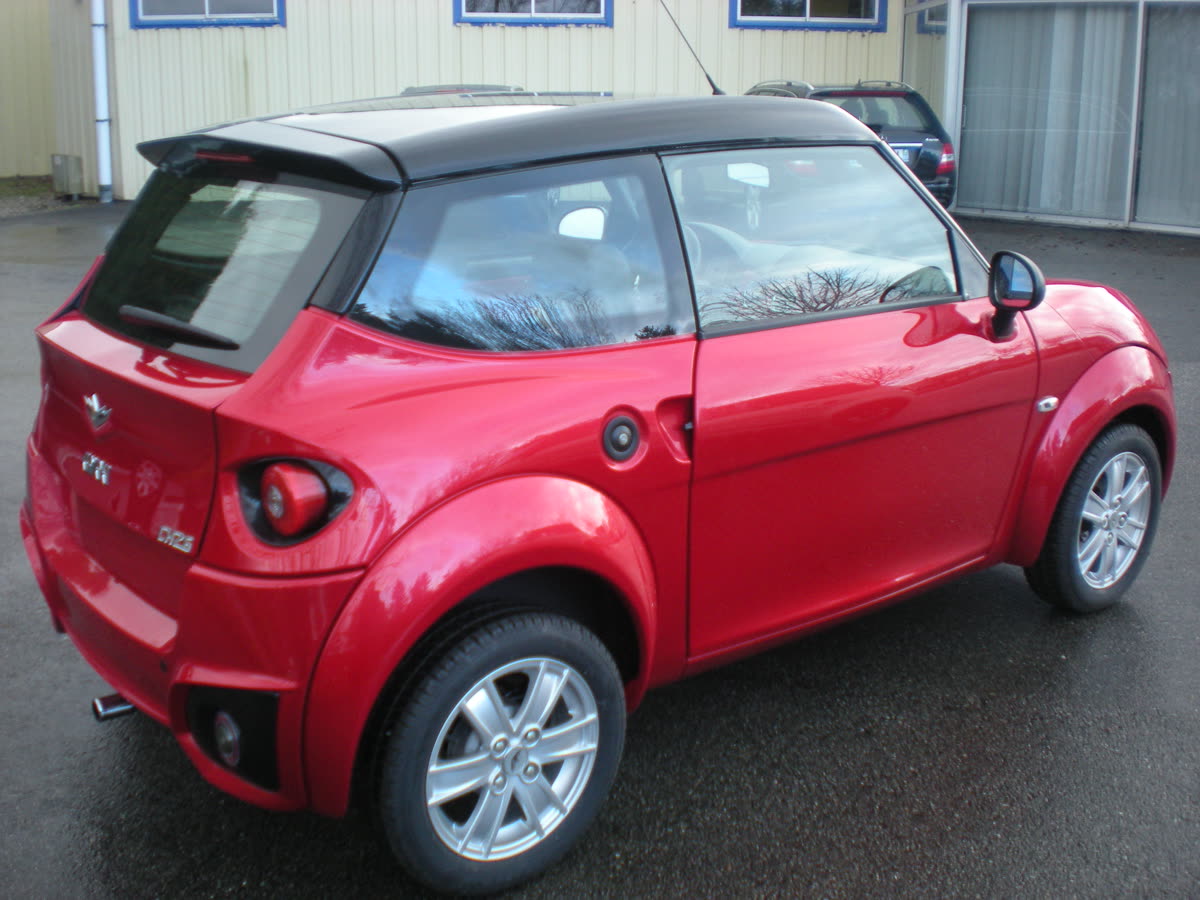
The CH46 and the Barooder have a look that divides opinion. The widened wheel arches, the angular shields, the bright colours available: everything evokes a mini 4x4 or a road-going kart. For those who like to stand out, Chatenet is almost without rival. For those who want something discreet, it is clearly the wrong place to look.
The Barooder version pushes the concept even further with its 1980s buggy vibes. Unique of its kind on the license-free car market.
Robustness and reliability: advantage Microcar
This is the central criterion for many buyers.
Microcar: the reputation of the Ligier group
The M.Go benefits from the economies of scale of the Ligier-Microcar group, the largest license-free car manufacturer in the world. Parts are standardised, technicians trained in large numbers, parts delivery times kept under control. On license-free car forums, feedback over 5-8 years of use is generally positive: a well-maintained M.Go easily exceeds 80,000-100,000 km.
The Lombardini engine fitted to the diesel versions is a benchmark in the category: reliable, economical, long proven. The CVT transmission deserves monitoring beyond 50,000 km, the same as with the competition.
Chatenet: solid but with less hindsight
Chatenet suffers from an image deficit on reliability, partly unfair. Recent models (post-2018) show good results provided the servicing is respected. The lightness of the chassis is an advantage at low mileage, but some owners report an increased sensitivity to vibration over the long term.
The dealer network is more sparse: around 400 sales points compared with 650 for Microcar, which can be a problem for urgent repairs outside large cities.
After-sales service and parts availability
| Criterion | Microcar | Chatenet |
|---|---|---|
| Sales points in France | ~650 | ~400 |
| Common parts lead time | 3-5 days | 5-10 days |
| Annual service cost | 150-220 € | 130-200 € |
| Used parts availability | Very good | Adequate |
The Microcar network is clearly more extensive. In Brittany, Normandy or rural areas, finding an approved Chatenet garage can require travelling 50 to 100 km. For Microcar, a service point is rarely far away.
Resale price
The used license-free car market rewards reputation. Microcar, thanks to its long history and the trust it inspires, generally resells 10-15% better than a comparable Chatenet of the same age and mileage. A 2019 M.Go in good condition sells more easily on LeBonCoin than a CH46 of the same year.
A notable exception: the Chatenet models with the most distinctive design (the Barooder) sometimes find a buyer faster thanks to their rarity, but at less predictable prices.
The typical profile for each brand
Microcar is for you if:
- Long-term reliability is your absolute priority
- You live in a rural or semi-rural area
- You drive few kilometres and want to resell easily in 5 years
- You are looking for a generous boot (100 litres)
- You are considering the electric M.Go Electric version (~14,000 €)
Chatenet is for you if:
- You have a tight initial budget (a saving of 1,500-2,500 € on purchase)
- The original design is a strong criterion
- You live in a city with an accessible network of garages
- You like the idea of a license-free car that stands out from the ordinary
- Doing the maintenance yourself does not scare you
The budget question
At an equivalent budget, Chatenet gives you access to a more complete finish (or saves you a few thousand euros). A well-equipped CH46 often comes to 1,500-2,500 € less than an equivalent Microcar M.Go. On a market where license-free cars sell for between 8,000 and 16,000 €, that is a significant gap.
If the budget is tight and you accept a less convenient after-sales service, Chatenet is a rational choice. If you value peace of mind over time, paying the Microcar premium is justified.
Verdict
Microcar wins on perceived reliability, after-sales and resale. Chatenet wins on price and originality. Both brands produce functional vehicles, the final decision depends on your priorities and your location.
Driving with peace of mind in a Microcar or Chatenet
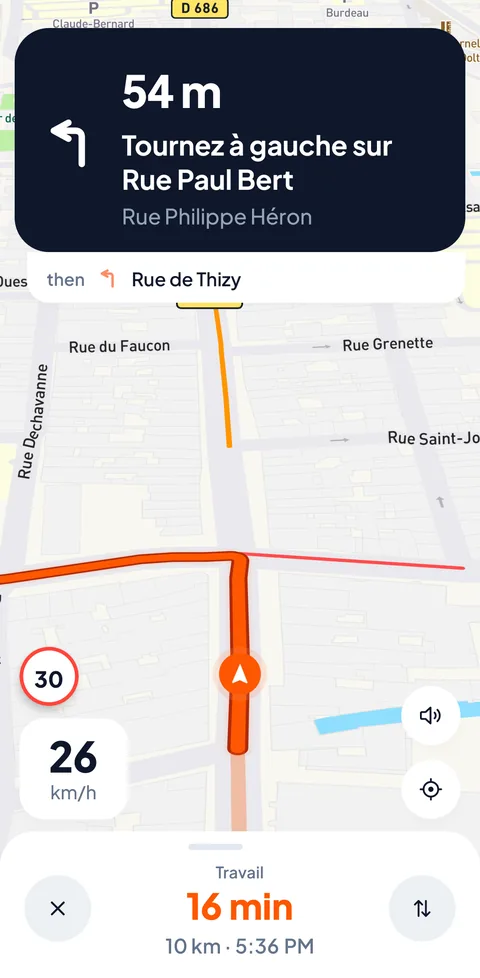
Microcar and Chatenet both deliver their vehicles without a built-in GPS. And as with all license-free cars, the risk is ending up directed onto forbidden roads by standard navigation apps, expressways, ring roads, 90 km/h roads.
TacTac is the GPS app designed solely for license-free cars. It filters out the roads inaccessible to license-free cars, calculates routes suited to 45 km/h and adapts to any model in the category. Also find our complete license-free car 2026 guide for everything you need to know about the world of license-free cars.
Join the TacTac waiting list and navigate stress-free, whatever your brand.