The first evening with an AMI
Isabelle arrives home with her freshly delivered Citroën AMI. She opens the boot, takes out the cable coiled in its bag, plugs it into the car’s socket, a compact proprietary connector, and looks for somewhere to plug the other end. The kitchen? The hallway? She ends up running the cable to the bathroom socket. The car is charging. She wonders all the same: is this really the right way to do it?
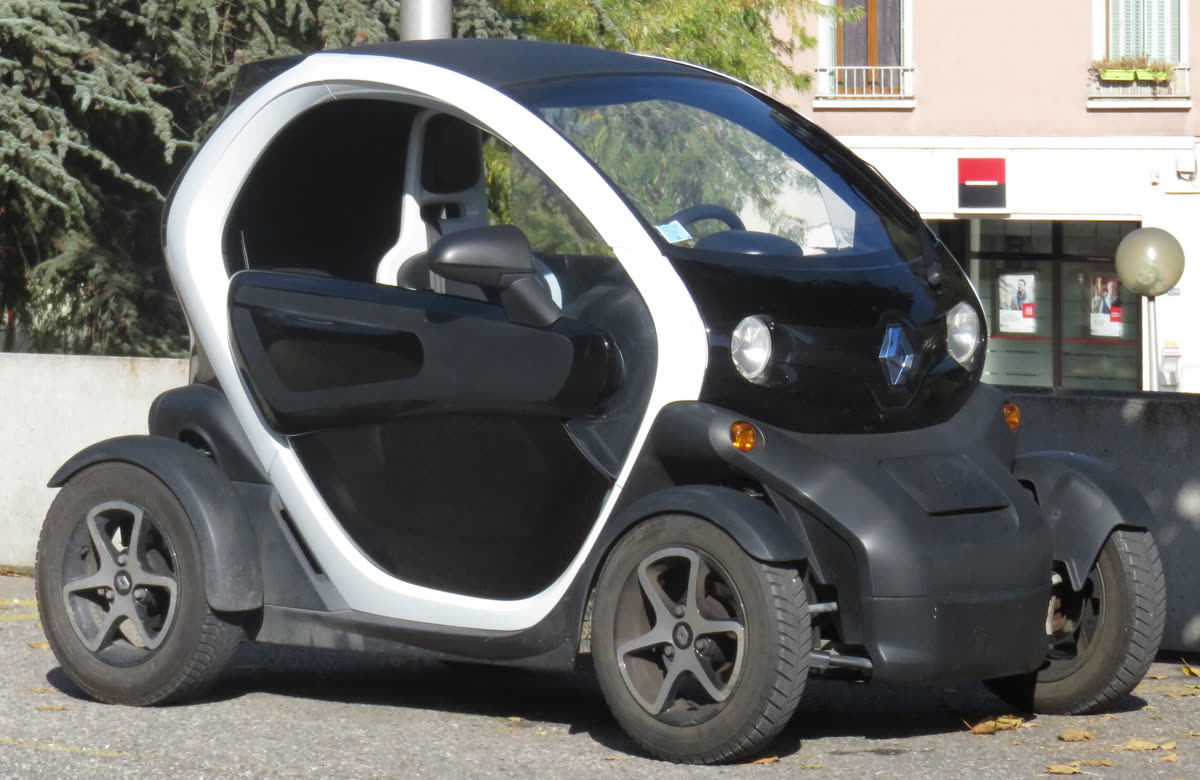
The answer is yes, with a few qualifications. Charging an electric license-free car at home is one of the great conveniences of this type of vehicle. Here is what you need to know.
Why home charging is simple for an electric license-free car
An electric license-free car is, technically, a very low-consumption vehicle. The battery in a Citroën AMI is 5.5 kWh. That of an Aixam E-City Pack or a Ligier JS50 Sport electric is between 6 and 10 kWh. By comparison, a Renault ZOE carries 52 kWh.
This reduced capacity has a direct consequence for charging: a standard domestic socket is sufficient.
No dedicated charging point is needed, no electrician for major works. A Schuko (type E/F) socket at 16 amperes, the standard wall socket in France, delivers 3.7 kW, which is perfectly suited to the maximum charge power accepted by electric license-free cars.
Charge time by model
| Model | Battery | Charge time (3.7 kW socket) |
|---|---|---|
| Citroën AMI | 5.5 kWh | 3h30 |
| Aixam e-City Pack | 6.9 kWh | 4h30 |
| Ligier JS50 Sport E | 6.0 kWh | 4h |
| Microcar M.Go Electric | 8.5 kWh | 5h30 |
In practice, if you plug your vehicle in when you get home at around 7 pm, it is charged by the next morning. Most electric license-free car drivers plug in systematically every time they return, just as they do with their phone.
The Mode 2 cable: what comes with your vehicle
Almost all electric license-free cars are delivered with a Mode 2 cable in the boot. This cable has an intermediate control box (ICCB) that manages communication between the vehicle and the wall socket and protects against overloads.
The standard Mode 2 cable supplied with license-free cars is rated at 10 A (not 16 A), giving an effective charge power of 2.3 kW. As a result, charge times are slightly longer than the table above; allow 4h30 to 6 hours depending on the model.
Some manufacturers offer an optional or standard 16 A Mode 2 cable. Check what your vehicle accepts before investing.
What not to do
- Do not use an extension lead, especially not a standard multi-socket strip. A standard extension lead is not rated for several hours of sustained charging. At best, the socket gets hot. At worst, it catches fire. If the socket is too far away, get an electrician to install a suitable socket in the right location.
- Do not use an old two-pin socket without earth: charging requires an earthed socket.
Cost of a full charge
The calculation is straightforward. In France, the regulated electricity tariff (EDF blue tariff) in 2025 is approximately 0.2516 euros/kWh at peak rate, and around 0.1735 euros/kWh at off-peak rate.
For a 7 kWh battery charged at peak rate: 7 x 0.2516 = 1.76 euros.
At off-peak rate (peak/off-peak tariff): 7 x 0.1735 = 1.21 euros.
Over a year, assuming 300 days of use with a full charge every evening, the annual electricity cost for a license-free car is between 360 and 530 euros, compared with 1,200 to 1,800 euros in fuel for an equivalent petrol model.
Do you need to install a home IRVE charging point?
An IRVE charging point (Infrastructure de Recharge pour Véhicules Électriques) is a dedicated installation, fitted by an IRVE-certified electrician. It typically delivers 7.4 kW (single-phase 32 A) or 11 kW (three-phase).
For an electric license-free car, an IRVE charging point is not necessary. The maximum charge power accepted by a license-free car is limited by the vehicle’s on-board charger (generally 3 to 3.7 kW). Installing a 7.4 kW point would not speed up charging.
A charging point may nonetheless be of interest if:
- You have several electric vehicles to charge
- You want precise monitoring of your vehicle-specific consumption (useful for reimbursement if the vehicle is used professionally)
- You want a neat, secure installation with a cable integrated into the wall
The cost of installing a home IRVE charging point varies between 600 and 1,200 euros (unit + installation) depending on the complexity of the electrical work. The ADVENIR grant can cover up to 50% of the cost in certain situations (individual in a detached house or apartment block with general meeting approval).
The case of apartment blocks
This is often the sticking point. You live in a flat and want to charge your license-free car in the building’s car park.
The ELAN law of 2018 and particularly the Brottes decree (older 2010 law, since supplemented) established the right to a socket: every co-owner or tenant has the right to request the installation of a dedicated socket or charging point in their parking space, at their own cost, subject to prior notification to the managing agent.
The procedure
- Notify the managing agent by recorded letter with acknowledgement of receipt, at least 3 months before the work. The managing agent must put the request on the agenda of the next general meeting.
- The general meeting votes: the vote is by simple majority. Unless the managing agent can prove that serious and legitimate grounds oppose it (a genuine technical constraint, not personal inconvenience), refusal is unlawful.
- The work is at your expense: you cover the cost of the circuit from the consumer unit to your parking space. Use an IRVE-certified electrician for the quote and installation.
In practice, for a license-free car charged via a simple Schuko socket, the process can be simplified: a 16 A earthed socket in your parking space is sometimes achievable through a modest electrical modification (150 to 300 euros), to be confirmed with the electrician and managing agent.
Real range: what to expect
Manufacturers claim ranges of 60 to 100 km depending on the model. In real-world use, plan on 50 to 75 km:
- Cold weather (below 5°C) reduces battery capacity by 15 to 25%
- Heavy use of heating or air conditioning further reduces range
- Frequent stop-starts in town are energy-intensive
For daily use, commuting, shopping, and medical appointments, a real-world range of 50 km is more than enough for most license-free car drivers. According to an ADEME study, 80% of daily journeys in France are under 15 km.
Key takeaways
- A standard wall socket (3.7 kW) is sufficient to charge an electric license-free car
- The Mode 2 cable supplied with the vehicle is adequate; no need to buy anything else
- The cost of a full charge is approximately 1 to 1.50 euros
- No IRVE charging point needed, except for convenience or multi-vehicle use
- In apartment blocks, the right to a socket applies: the request is made by recorded letter to the managing agent
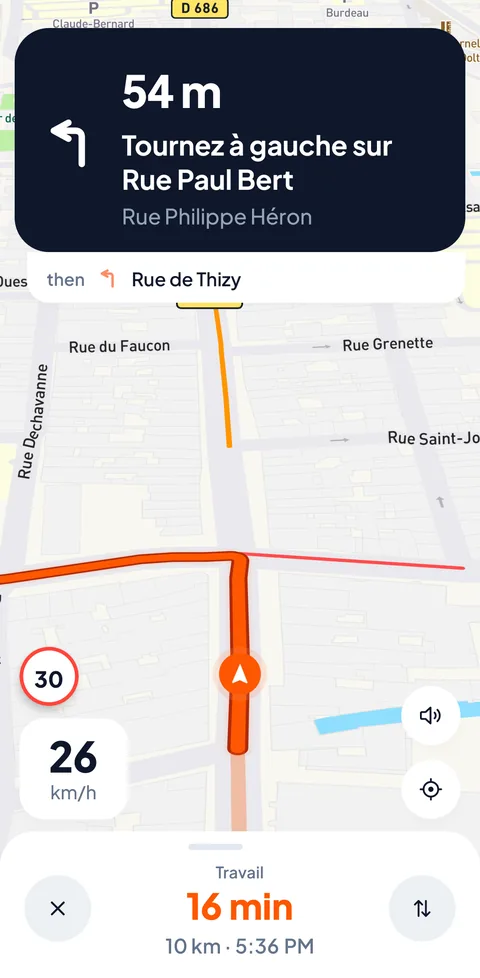
Once your electric license-free car is charged and on the road, the question of navigation arises. Standard GPS apps (Waze, Google Maps) ignore the constraints of 45 km/h: they suggest unsuitable routes and systematically underestimate ETAs. TacTac is the GPS app designed exclusively for license-free cars, with filtered L6e routing and journey times calculated for your actual speed.