€35 FPS for a misunderstood parking rule
Brigitte, 72, has been driving a Citroën Ami for a year in Bordeaux. She regularly parks in a paid parking zone but is not sure whether the rules are the same as with the conventional car she used to have. One morning, she finds a payment notice under her windscreen wiper: a €35 post-parking charge for failing to pay the meter. She mistakenly thought she benefited from a special arrangement for her little car.
This misunderstanding is common. A license-free car drives at 45 km/h, but for parking, the rules are strictly identical to those of an ordinary car.
General rule: identical to a normal car
The license-free car is a registered motor vehicle. As far as parking is concerned, it is subject to the same Highway Code as any saloon car. There is no special exemption for light L6e quadricycles regarding:
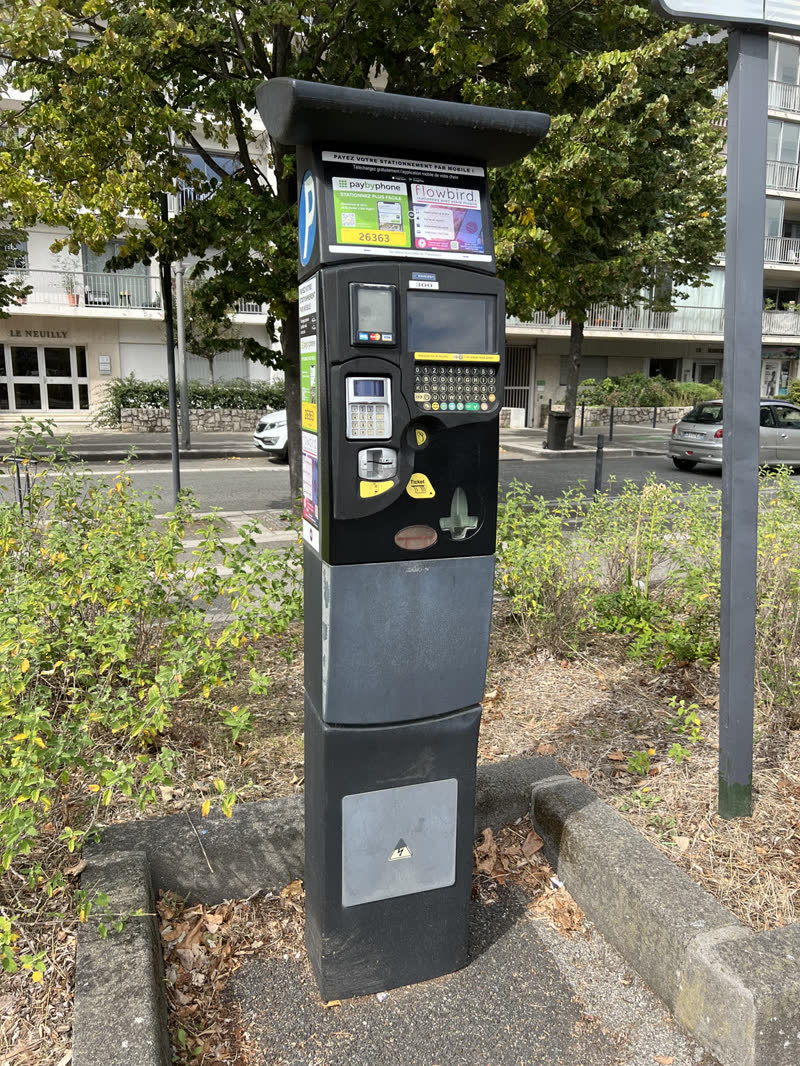
- Compliance with parking meters and payment terminals
- Maximum parking times in blue zones (generally 1h30)
- The ban on parking in reserved spaces (deliveries, disabled, two-wheelers)
- Paid parking zones and their rates
In other words: if you park your license-free car in a paid zone without paying, you get the same post-parking charge as the driver of a Peugeot 208. If you exceed the authorised time in a blue zone without a disc, same penalty.
Reduced size: a real advantage in town
While the rules are the same, the size changes everything in practice. A license-free car measures on average 2.5 to 2.7 m long and 1.4 to 1.5 m wide, around 30 to 40% less than a conventional city car.
This reduced size offers several concrete advantages:
Spaces impossible for a conventional car. In the narrow streets of a town centre, the leftover spaces between two parked cars, the recesses in building façades, the corners of junctions too short for a saloon, a license-free car fits where no other vehicle can. No need to spend 10 minutes circling the block to find a space.
Easier angle parking. Parallel or perpendicular parking manoeuvres are noticeably simpler with 1.5 m of width than with 2 m. In multi-storey car parks with narrow spaces, a license-free car manoeuvres with disconcerting ease.
Less risk of scrapes. A shorter, narrower vehicle in a standard bay leaves more room to open the doors without touching the neighbouring cars.
Blue zones: the disc is mandatory
Limited-time parking zones, marked by a sign with a blue arrow, require the use of a parking disc. This disc, which you must place visible behind the windscreen with the hands set to your arrival time, applies to your license-free car just as it does to any vehicle.
The maximum authorised time is generally 1h30, sometimes less depending on the town. Failure to comply exposes you to an FPS (post-parking charge) whose amount varies by city, from €17 to €50 depending on the town.
If your license-free car has no dashboard where you can fix a conventional disc, it generally goes on top of the dashboard or wedged between the windscreen and the pillars.
Paris and the post-parking charge (FPS)
Paris deserves a particular focus. Since 2018, parking offences are no longer fines issued by the police but FPS (post-parking charges) issued by the staff of the parking companies appointed by the City.
The FPS rate in Paris is €50 to €75 depending on the district and the type of zone. This amount is deducted from the sum due if you pay the meter late during the day, but it remains due if you do not pay at all.
A license-free car parked without payment in the 9th arrondissement of Paris receives the same FPS as a saloon. The staff identify the vehicle (registration plate) and issue the FPS via the automated control system.
Practical tip: parking payment apps (PayByPhone, EasyPark, Flowbird) work with a standard registration plate. Your license-free car has a normal plate, use these apps as you would for any vehicle.
Parking on the pavement: forbidden
An understandable temptation with a vehicle 1.5 m wide: parking half on the pavement to clear the roadway. It is forbidden. The Highway Code is clear: parking on the pavement is forbidden for any motor vehicle, whatever its size.
A license-free car parked on the pavement is fined exactly like a car. The argument of reduced size does not hold.
Occasional exception: some towns allow partial parking on the pavement in specific zones, marked by a sign. Outside these explicitly authorised zones, the ban applies.
Delivery bays: forbidden except by exception
Spaces reserved for deliveries (yellow markings, specific sign) are off limits for parking by all vehicles, including license-free cars. They are reserved for active loading/unloading operations.
The only exception: if you are carrying out a delivery or collecting goods, and your license-free car is being used for that purpose. In that case, the usual loading-and-delivery rules apply (very short duration, hazard lights, presence on board or in the immediate vicinity).
Disabled spaces (GIG/GIC): strictly reserved
Spaces reserved for disabled people are accessible only to vehicles carrying the European disabled parking badge (formerly GIG/GIC, now replaced by the disabled parking card).
If you hold this card, your license-free car can park in these spaces, with the badge displayed behind the windscreen the same way as in any vehicle.
If you do not, parking your license-free car in a disabled space because “the space is too small elsewhere” is an offence: a fine of €135 and the risk of being towed away.
Resident parking and resident permits
In cities that have introduced paid resident parking (Paris, Lyon, Bordeaux, Nantes, etc.), resident permits are personal and linked to a registration plate. Your license-free car, if it is registered at an address in the zone, can be linked to a resident permit like any other vehicle.
The resident rate, often €1 to €3 per day, applies to your license-free car just the same. Ask your town hall about the registration process.
What you can do that conventional cars cannot
Despite the same rules, the reduced size creates real advantages in everyday situations:
- Slip into a space too short for a normal car (about 3 m is enough to park a license-free car, compared with 4.5 to 5 m for a saloon)
- Park in old underground car parks with narrow spaces or tight-radius ramps
- Get out of a space even if a vehicle is right in front of or behind you, thanks to the small overhang
To find your parking intelligently
Knowing the rules is good. But in an unfamiliar city, finding the right parking for your license-free car without going round in circles also requires knowing the streets. For drivers who use a license-free car daily in town, navigating with a GPS suited to their speed changes the search for parking: you calculate the return routes from a known car park, you avoid the roads that needlessly lengthen the trip.
TacTac is designed for this: navigation at 45 km/h, reliable ETAs, routes suited to your vehicle so you arrive at your destination with peace of mind, including when the destination is the neighbourhood car park.
FAQ
Can a license-free car park for free in Paris?
No, except in the free zones that exist for everyone. Paid parking zones apply to license-free cars like any other vehicle. Some towns offer free parking to electric vehicles, so if your license-free car is electric, ask your town hall.
Does a license-free car have to use parking meters like cars?
Yes. A license-free car is a registered vehicle subject to the same parking rules as a conventional car.
Can you leave a license-free car on the road overnight without risk?
On a public road, the night parking rules apply just as during the day. Outside zones where parking is forbidden at night (snow clearing, markets), you can park normally. Remember to lock up and not to leave documents visible.
In summary
Join the TacTac waiting list, and always arrive on time at the car park of your choice, even in town.