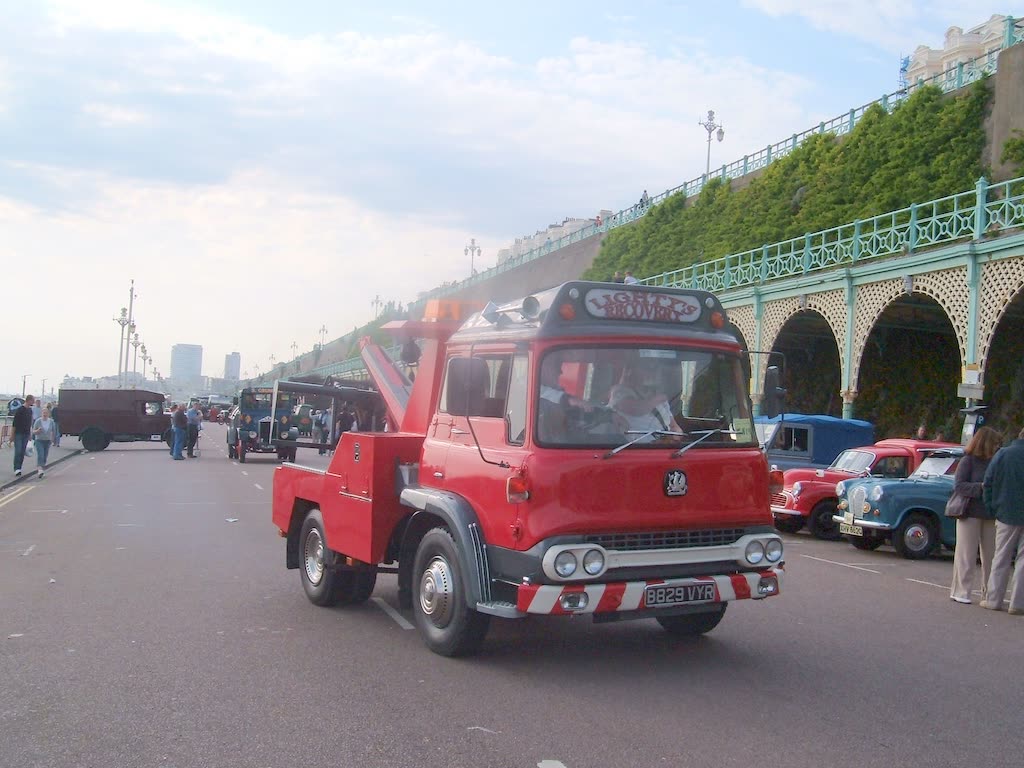
Arnaud, 52, lives in Béziers. No licence since a medical revocation three years ago. His Microcar M.Go is his only means of transport. One January morning, at the roundabout near the shopping centre, the engine coughs, stalls, and refuses to restart. Arnaud has no idea what to do; he has never had to deal with a breakdown. Two hours later, the recovery truck has been and gone, the car is at the garage, and the bill looks like 280 euros. He could have got away with 80 euros if he had known what to do from the start.
First actions: emergency signalling
The first mistake license-free car drivers make when broken down is staying in the flow of traffic without signalling the vehicle. Even at 45 km/h, a car stopping suddenly on the road is a real danger to others.
As soon as the car stops:
- Switch on the hazard lights (the red triangle button on the dashboard).
- Get out of the vehicle staying on the pavement or verge side, never on the road side.
- Put on the yellow high-visibility vest (compulsory; it must be inside the cabin, not in the boot).
- Place the warning triangle 30 metres behind the vehicle on a road, 100 metres on a fast road.
If you have no triangle, leave your hazard lights on and move away from the vehicle. On a motorway, a license-free car is not permitted to travel there at all; if you are on one by mistake, call 15 or 17 immediately.
Who to call for license-free car breakdown assistance?
Manufacturer assistance
Most new license-free cars come with a manufacturer breakdown assistance included for 2 to 4 years. Check your service book or vehicle manual for the number. At Aixam, Ligier, Microcar, or Chatenet, this service is generally available 24/7.
Manufacturer assistance covers towing to the nearest approved dealer at no extra charge during the covered period.
Your insurer’s assistance
If your policy includes a breakdown guarantee, as is the case with most mid-range and fully comprehensive policies, your insurer can send a recovery vehicle. Check the recovery radius (often a minimum of 50 km from home to activate the guarantee; some policies specify this differently).
Tip: save the assistance number in your phone contacts when you buy the vehicle. Not the moment to search through paperwork once you are broken down.
A local recovery service
In town or in a dense area, a local garage can respond quickly. Expect between 80 and 180 euros for a call-out depending on distance. Check that they know license-free cars: some general mechanics are not equipped for light quadricycles with CVT gearboxes.
Towing a license-free car: a technical constraint
License-free cars (category L6e) weigh between 300 and 500 kg unladen. This size requires specific precautions when towing.
A common problem: standard recovery flat-beds are calibrated for much heavier vehicles. The straps must be positioned on the designated anchor points; ask the recovery technician to locate them with you before loading. Incorrect positioning can deform the sill panels, which are often plastic on entry-level license-free cars.
A license-free car cannot be towed behind another vehicle using a rope or tow bar. The CVT transmission on most petrol models cannot withstand this. A flat-bed or a wheel-lift recovery truck is essential.
Average response time: 45 minutes in an urban area, 1h30 to 3 hours in a rural area.
The most common license-free car faults
The 12V battery discharged
This is the number-one breakdown across all powertrains. On a petrol license-free car, the battery powers the starter and electrical equipment (lights, dashboard). If it is flat, the engine will not start.
Signs: the dashboard does not light up, or lights up weakly; the starter motor groans but the engine does not fire.
Solution: a recovery technician can perform a jump-start with jump leads. If the battery is old (more than 3 years), replacement is recommended. Cost: 60 to 120 euros for a standard license-free car battery.
The timing belt (petrol models)
On the small diesel or petrol engines in license-free cars (often single or twin-cylinder), the timing belt is a critical wear part. Its failure immobilises the vehicle and can, depending on the engine, damage the valves.
Preventive replacement is recommended between 40,000 and 60,000 km depending on the manufacturer. Cost: 250 to 450 euros parts plus labour.
Clogged air filter
A dirty air filter reduces performance, increases consumption, then ends up causing misfires or stalling. It is a cheap maintenance part (15 to 35 euros) to replace every 10,000 to 15,000 km.
Contaminated fuel
On diesel license-free cars, contamination of diesel with water (poor quality, condensation in a tank left unused for a long time) can block the injection system. Cost of cleaning the circuit: 150 to 300 euros.
Tyres: puncture or premature wear
License-free cars run on small tyres (typical dimensions: 135/70 R13 or 145/70 R13) that are less common than standard sizes. Check availability at your usual garage in advance. Some petrol stations do not carry the right sizes.
Keep a spare wheel (if your model has one) or a temporary puncture repair kit in the boot.
Average cost of a license-free car breakdown
| Type of fault | Estimated cost (parts + labour) |
|---|---|
| 12V battery | 80 to 150 euros |
| Tyre + fitting | 80 to 130 euros |
| Air filter + oil filter | 60 to 100 euros |
| Timing belt | 280 to 500 euros |
| Fuel pump | 200 to 400 euros |
| Injection circuit cleaning | 150 to 300 euros |
Preventive maintenance: the work that prevents breakdowns
The majority of license-free car breakdowns are avoidable with regular maintenance. Here is the minimum to plan for.
Every 10,000 km or once a year:
- Engine oil change (petrol models): 60 to 100 euros
- Air filter and oil filter replacement
- Brake fluid level check
- Tyre pressure and sidewall condition check
Every 40,000 to 60,000 km:
- Timing belt replacement
- Spark plug replacement (petrol models)
From 4 years of ownership:
- Compulsory roadworthiness test every 2 years
On an electric license-free car (Citroën Ami, Aixam e-City, Opel Rocks-e), maintenance is significantly simpler: no oil changes, no belt, no oil filter. The main things to monitor are the traction battery and brake condition.
Navigating to reduce breakdown risk
A license-free car broken down on an 80 km/h road is a dangerous situation. One way to reduce the probability is to avoid unsuitable roads, fast roads, and high-traffic national routes where an immobilisation is hard to manage.
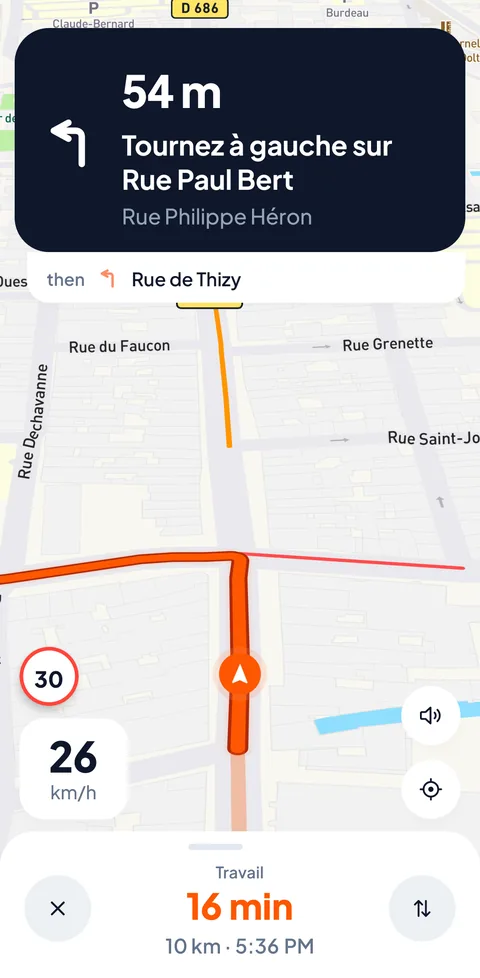
TacTac calculates routes designed for license-free cars, favouring quiet and safe roads. Less daily stress, and if a breakdown does happen, it happens in better conditions.