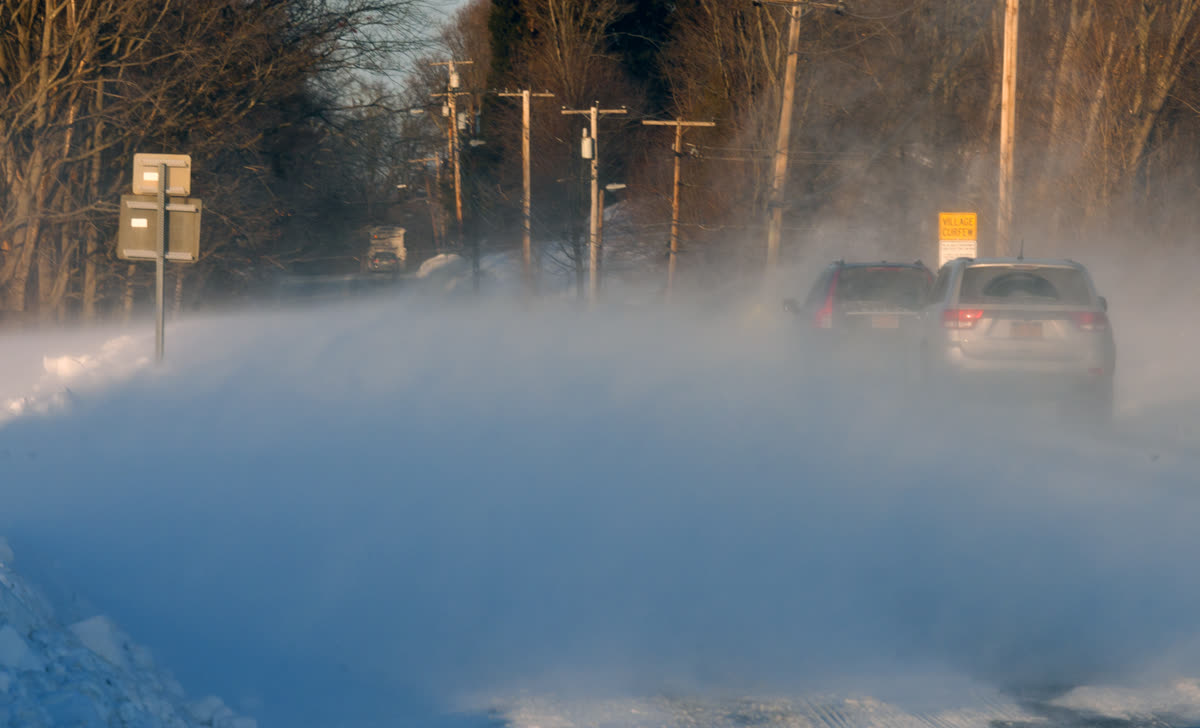
Grenoble, December, 6.30 a.m.
Maryline, 58, a home-visit nurse in Isere, uses her Ligier JS50 for her daily rounds. On this December morning, the car park is white. She brings out the vehicle, pulls onto the road, and immediately notices it is not behaving as expected. The license-free car weighs 425 kg. On the thin layer of ice, the tyres are searching for grip.
Winter in a license-free car needs preparation. Here is what actually changes, and what you should do about it.
The Mountain Law: Compulsory Since November 2021
The Loi Montagne 2, in force since 1 November 2021, requires drivers to fit their vehicles with winter tyres (or chains) in municipalities located in mountain areas during the period from 1 November to 31 March.
The areas covered include the Alps, the Pyrenees, the Massif Central, the Jura, the Vosges, and Corsica (mountain zones). The official list covers 48 departments and several thousand municipalities.
This obligation applies to license-free cars just like any other motor vehicle. There is no exemption for L6e light quadricycles.
Penalty for non-compliance: since the 2023-2024 season, a fine of 135 euros can be issued for driving without the required equipment in the affected zones. “Mandatory equipment” signs mark the relevant roads.
Winter Tyres or Chains?
The law accepts two types of equipment:
- Winter or all-season tyres bearing the 3PMSF marking (three-peak mountain snowflake). The old M+S marking alone has not been sufficient since the 2024-2025 season.
- Approved chains or snow socks (NF EN 16662-1 standard), fitted to the drive wheels before entering the affected zones.
For the majority of license-free car drivers in flatland areas, 3PMSF-marked all-season tyres are the most practical solution: you put them on and forget about them from November to March.
License-Free Car Tyre Sizes: What Is Available?
This is a real constraint. License-free cars use atypical tyre sizes. The most common size is 135/70 R13, but some models take 145/70 R13 or 155/65 R14.
The good news: the market for winter and all-season tyres in these sizes does exist. Michelin, Hankook, Bridgestone, and others offer references in these dimensions. The price is generally 50 to 80 euros per tyre for a winter or all-season 135/70 R13.
Always check the exact size printed on the sidewall of your current tyres before ordering. Fitting them at a tyre centre is straightforward.
Behaviour on Ice: Weight Is Everything
A license-free car weighs between 350 and 500 kg. A standard car weighs around 1,000 to 1,500 kg. This difference in mass has a direct effect on grip.
Less Pressure on the Tyres Means Less Grip
A tyre’s grip depends partly on the pressure it exerts on the road surface. A light vehicle exerts less pressure, which reduces the tyre’s ability to bite into packed snow or ice.
In plain terms: a license-free car slides more easily than a heavier car under the same road conditions, even with equivalent winter tyres.
Front-Wheel Drive and Handling
Almost all license-free cars are front-wheel drive (engine over the front axle, front wheels driven). This layout offers good straight-line stability but can produce understeer on ice: the vehicle tends to “run wide” in a corner when the front wheels lose grip.
Practical rules on ice or snow:
- Reduce speed before corners, not during them
- Accelerate gently from a standstill, not abruptly
- Increase following distances (on ice, a license-free car takes twice as long to stop)
- Avoid harsh braking; brake gently and early
Cold-Weather Starting: Petrol and Electric
Petrol License-Free Cars
The single-cylinder engine of a petrol license-free car handles the cold, but it needs time to warm up. In sub-zero temperatures:
- Start the engine and let it idle for 2 to 3 minutes before moving
- Do not push the engine hard before it reaches operating temperature (oil is more viscous in the cold)
- Check antifreeze levels in the cooling circuit before winter (an annual check is recommended)
Watch out for the windscreen: license-free cars often have limited de-icing systems. Keep an ice scraper handy, never pour hot water on the glass (risk of cracking), and let the rear demister do its job before you set off.
Electric License-Free Cars
Winter is the main enemy of a lithium battery. In cold weather, the effective capacity of a Li-ion battery drops by 20 to 35 percent depending on the outside temperature.
A Citroen Ami showing 70 km of range in normal conditions may drop to 45-50 km at 0 degrees C. The same reductions apply to all electric models in the category.
Tips for electric license-free cars in winter:
- Charge indoors (in a heated garage) rather than outside in extreme cold; batteries accept charging better at positive temperatures
- Pre-condition the battery before leaving if the model allows it (start heating while the vehicle is still plugged in)
- Reduce cabin heating use, which draws directly from the battery; dress more warmly instead
- Replan long trips if the remaining range is tight: recalculate taking the winter reduction into account
Headlights and Reduced Visibility
License-free cars often have less powerful headlights than standard cars, a direct consequence of L6e category limits (maximum 6 kW electric or 400 cc petrol). In snow or fog, this makes itself felt.
In practice:
- Switch on your lights as soon as visibility drops, even during the day
- Check bulbs before winter (easy and cheap to replace on most models)
- Clean headlight lenses regularly in winter; road salt and dirty water spray clog up the lenses
If your license-free car has fog lights, use them only in thick fog or heavy snowfall, not simply because it is dark.
Practical Summary
| Situation | Recommended action |
|---|---|
| Mountain zone Nov-Mar | 3PMSF tyres or chains compulsory |
| Sub-zero temperatures (petrol) | 2-3 min warm-up before setting off |
| Sub-zero temperatures (electric) | Pre-condition while plugged in, recalculate range |
| Ice | Slow down before corners, triple following distance |
| Snow at departure | Gentle acceleration, no wheel-spin |
| Reduced visibility | Lights on, windows fully de-iced before leaving |
Winter Routes Suited to License-Free Cars
In winter, avoiding mountain passes and high-altitude roads when conditions are uncertain is a basic rule. For license-free car drivers, route choice carries extra weight: choose roads with moderate traffic (to avoid getting stuck behind slow convoys), prefer roads that local authorities clear first, and avoid lightly used roads that stay icy the longest.
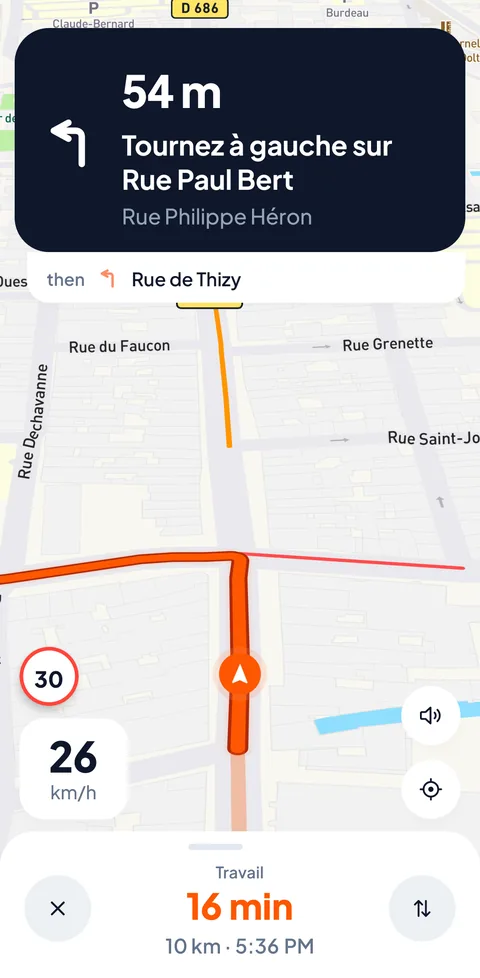
A GPS calibrated for license-free cars, such as TacTac, suggests routes matched to your actual speed, including the necessary adjustments when fast roads are off-limits.
FAQ
Are all-season tyres enough for a license-free car in mountain areas?
If they carry the 3PMSF marking (three-peak mountain snowflake), yes, the Mountain Law accepts them on the same basis as pure winter tyres. All-season tyres without this marking (M+S only) have not been sufficient since 2024-2025.
Does my insurance cover an accident on snow without winter tyres?
In the event of an accident, the insurer may cite regulatory non-compliance (failure to fit compulsory equipment in a Mountain zone) to reduce or refuse the pay-out. Fitting the correct equipment is also a contractual safeguard.
Can you drive an electric license-free car at minus 10 degrees C?
Yes, but with significantly reduced range (up to 40 percent less) and ideally after pre-heating the battery. Check that the vehicle’s heating system is working correctly.
In Summary
Winter in a license-free car takes preparation: suitable tyres, adjusted driving behaviour on ice, and range management for electric models. The Mountain Law applies without exception. And the vehicle’s light weight, an advantage in summer, becomes a risk factor on a slippery road.
Join the TacTac waiting list and navigate with confidence all year round, including when roads get difficult.