A family meal, one drink too many, and you head home in your license-free car thinking the rules on alcohol do not really apply to you. That is a mistake that can cost you dearly. Motorized light quadricycles (category L6e) are subject to exactly the same blood alcohol rules as regular cars, with the same checks and the same penalties.
The legal limit: 0.5 g/L of blood for everyone
Article R234-1 of the Highway Code sets the maximum permitted blood alcohol level at 0.5 g/L of blood (or 0.25 mg/L of exhaled air) for all drivers of motorized vehicles. License-free cars are no exception.
In practice, this threshold matches roughly 2 glasses of wine for a man of average build, and significantly less for a woman or for anyone who has eaten lightly.
The limit drops to 0.2 g/L on a probationary licence
For drivers on a probationary licence (the first three years after obtaining it, two years after accompanied driving) and for those still driving accompanied, the limit falls to 0.2 g/L of blood (0.1 mg/L of exhaled air). This is near-zero tolerance: a single drink is often enough to cross it. In practice, a young driver still in the probationary period who also drives a license-free car is held to this 0.2 g/L limit. For other license-free car drivers, the standard 0.5 g/L limit applies. The 0.2 g/L threshold depends on licence status, not on age.
This rule applies to driving a license-free car just as it applies to any other motorized vehicle.
Checks: identical to those for regular cars
Law enforcement gives no special treatment to license-free cars during alcohol checks. The procedure is identical:
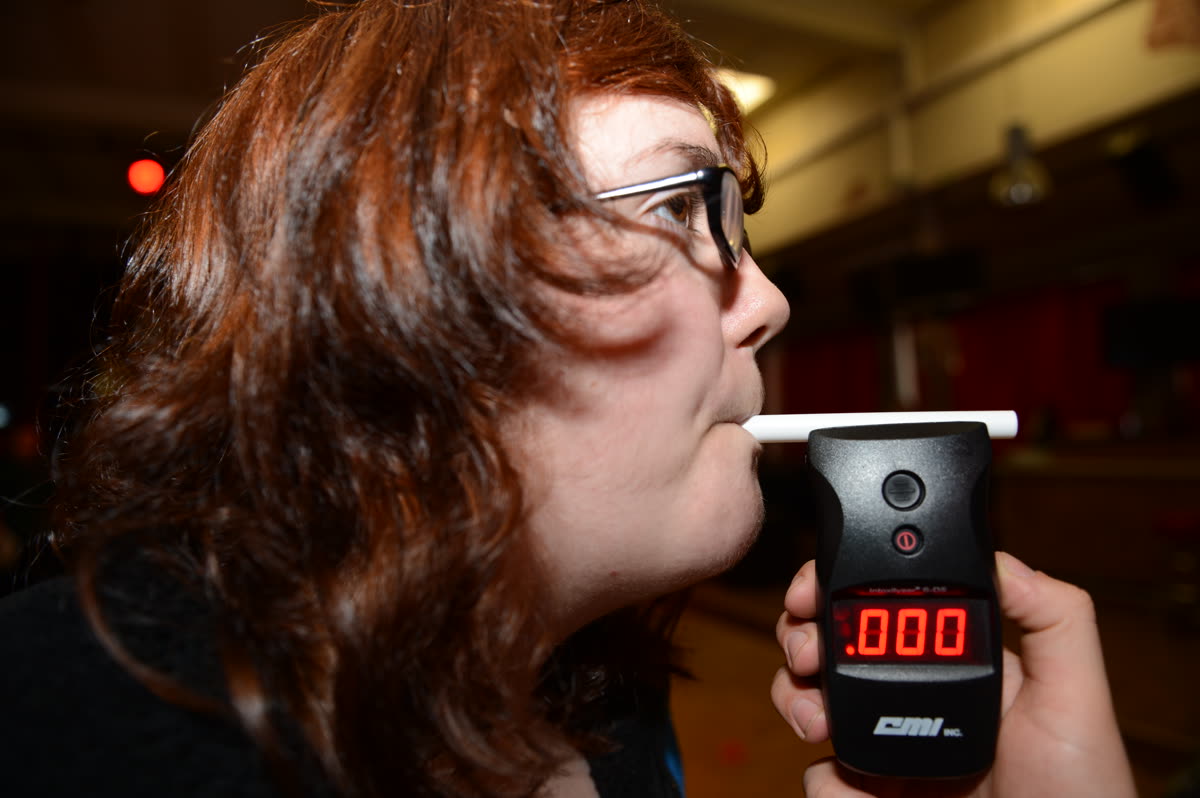
- Breathalyzer (breath test), the first tool used during a roadside check or after an accident. If the result is positive or if you refuse to blow, the procedure continues.
- Precision breathalyzer (approved breathalyzer at the station), to confirm the result.
- Blood test, if the result is contested or in case of doubt. It can also be imposed directly after an accident.
Refusing to blow is a standalone offense punished with the same penalties as criminal-level intoxication (above 0.8 g/L). Many drivers are unaware of this.
Penalties by level
Between 0.5 and 0.8 g/L of blood: a fine
This is the fine-level range. The penalties are:
- Fixed fine of 135 € (reduced to 90 €, increased to 375 €)
- Loss of 6 points on the B license (if you have one)
- Administrative suspension of the license possible for up to 3 years (including the right to drive a license-free car)
Above 0.8 g/L of blood: an offense
This is where things get serious. Going over the 0.8 g/L threshold is a road offense punishable by:
- A fine of up to 4,500 €
- A prison sentence of up to 2 years
- Suspension of the right to drive any motorized vehicle, including license-free cars, for up to 3 years (or permanently in case of reoffending)
- Impoundment and confiscation of the vehicle possible
- A mandatory road safety awareness course
In case of reoffending within 5 years, the maximum penalties are raised to 9,000 € in fines and 4 years in prison.
The ban on driving a license-free car without a B license
This is the point license-free car drivers forget most often: even without a B license, a judge can ban you from driving a motorized light quadricycle. This measure, handed down by the criminal court, is specific to the L6e category.
Driving a license-free car during a ban period is a new offense, punishable by a fine of up to 15,000 € and 2 years in prison.
Drugs: same procedure, same risks
Driving under the influence of narcotics is also forbidden for license-free car drivers. Article L235-1 of the Highway Code applies without distinction. Saliva tests can be carried out during any roadside check or after an accident.
Driving under the influence of narcotics is an offense punished by:
- 2 years in prison
- A fine of 4,500 €
- Suspension or ban on driving
When alcohol and drugs are combined, the penalties are increased (3 years, 9,000 €).
After an accident: the consequences for your insurance
If you are involved in an accident while intoxicated in your license-free car, your insurer can invoke a nullity of the insurance contract or an exclusion of coverage, depending on the terms of your policy. In both cases, you personally bear the full cost of the damage caused to third parties, which can amount to considerable sums in the event of bodily injuries.
The law still requires the insurer to compensate the victims in the first instance, but it will then come after you to recover the amounts paid out.
”License-free” does not mean “consequence-free”
The idea that driving without a B license puts you in a gray area when it comes to alcohol is a dangerous illusion. Gendarmes and police officers apply the same procedures, the same thresholds, the same penalties, whether they stop you in a Citroën or a Microcar.
The difference is that license-free car drivers often travel in areas they do not know well, take roads they do not master perfectly, and are already in a state of heightened vigilance. Adding alcohol to that multiplies the risks of a navigation error, a missed turn, an accident.
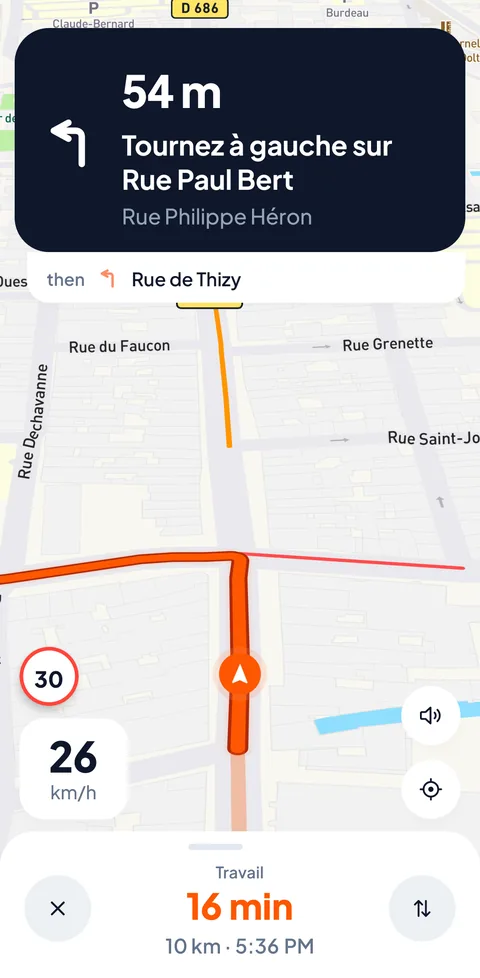
TacTac helps you plan your trips safely, by automatically filtering out roads incompatible with your license-free car, so you can focus on your driving.
Join the TacTac waitlist and navigate without nasty surprises.