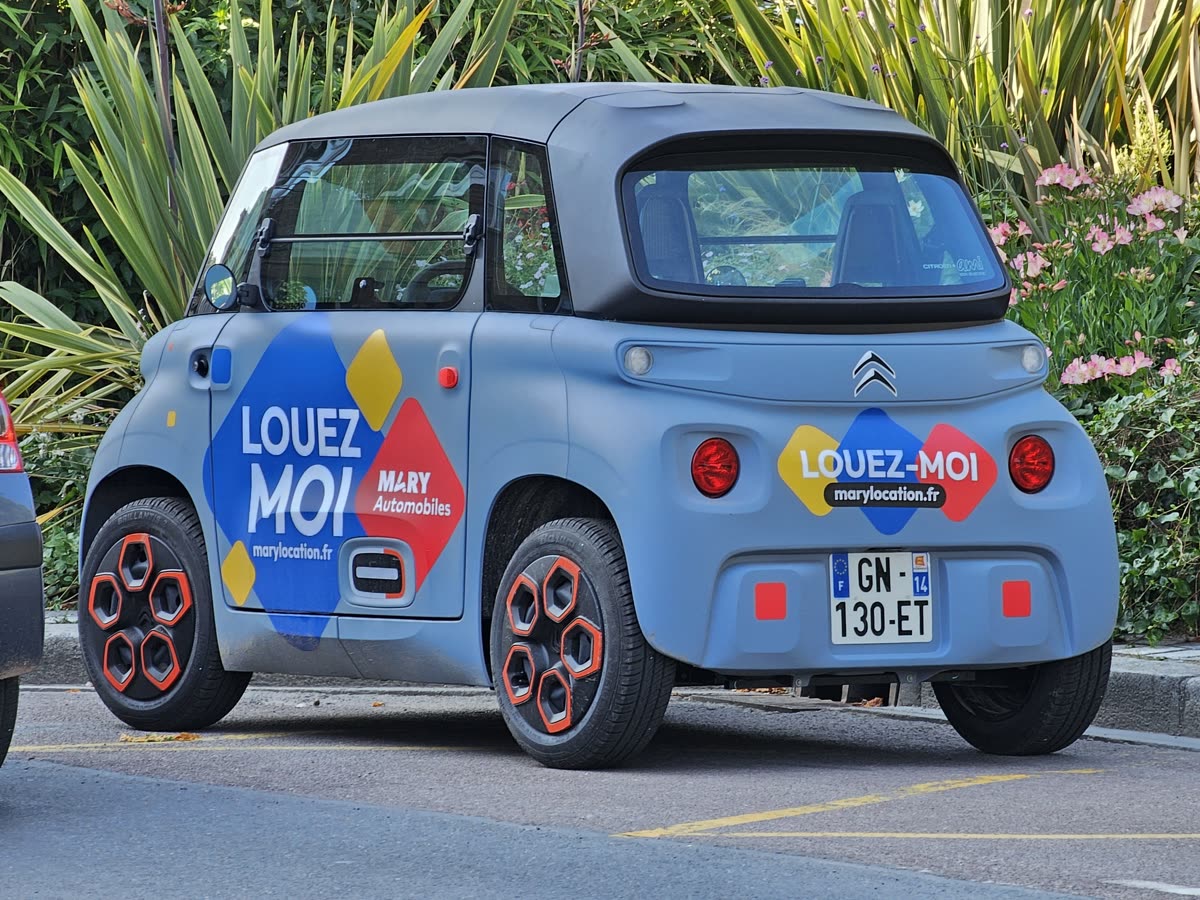
Driving a license-free car means accepting a fundamental constraint: you cannot go everywhere. The 45 km/h limit rules out a whole range of fast roads. But which ones exactly? More to the point, how do you avoid ending up on them by mistake?
The legal framework: what the Highway Code says
Article R421-2 of the Highway Code is unambiguous: motorised light quadricycles (category L6e) cannot use roads where the imposed minimum speed exceeds their manufacturer maximum speed. In practice, since a license-free car is limited to 45 km/h, any road imposing a minimum speed of 60, 70, or 80 km/h is off-limits.
Beyond minimum speed, it is a safety issue: a vehicle travelling at 45 km/h on a road where traffic flows at 110 km/h is a dangerous obstacle for every other road user.
Types of forbidden roads
Motorways
No license-free car is permitted on a motorway. The minimum speed there is 80 km/h, almost double a license-free car’s capability.
Expressways and access-controlled roads
Expressways, marked with a green sign on a white background, are also forbidden. These dual carriageways, with speeds between 90 and 110 km/h, are common on the outskirts of large cities and often represent the most direct route, which explains why standard GPS apps favour them.
Ring roads and bypass roads
This is where things become complicated, because these roads sit at the heart of urban traffic:
- The Paris Périphérique: forbidden to license-free cars. With traffic oscillating between 50 and 80 km/h and no hard shoulder, it is one of the most dangerous routes for a light quadricycle.
- The Bordeaux ring road (A630): classified as a motorway, so strictly forbidden. Yet it is the main route for crossing the Bordeaux urban area.
- The Toulouse ring road: the expressways encircling the city are off-limits for license-free cars.
- Lyon’s boulevard périphérique: sections classified as fast roads (notably the boulevard Laurent Bonnevay) are forbidden.
- The Rennes ring road: forbidden to vehicles limited to 45 km/h.
- The Nantes boulevard périphérique: certain 90 km/h sections are forbidden.
Departmental roads with high speed limits
Some departmental or national roads display limits of 80 or 90 km/h. While not technically forbidden to license-free cars, they remain strongly inadvisable. Driving at 45 km/h on a national road with heavy goods vehicles is an experience every license-free car driver prefers to avoid.
The penalties
- Class 4 fine: 135 euros (reduced to 90 euros if paid early, increased to 375 euros if paid late)
- In cases of endangerment: fine of up to 1,500 euros
- Vehicle immobilisation by law enforcement
- Impact on insurance: in the event of an accident on a forbidden road, your insurer may invoke an exclusion clause
These penalties are not theoretical. License-free car drivers are easily identifiable by their speed.
Why standard GPS apps are dangerous for license-free cars
Google Maps, Waze, Apple Maps: all these GPS apps are designed for vehicles that can use the entire road network. They have no “license-free car” option and do not filter forbidden roads.
Scenario 1: the “suggested” ring road. You live on the outskirts of Bordeaux and want to reach a neighbourhood on the other side of the city. Google Maps naturally suggests the ring road (A630), the fastest route for a standard car. For your license-free car, it is a forbidden and deadly route.
Scenario 2: the “invisible” expressway. In the countryside, your GPS guides you onto a dual-carriageway national road. Nothing warns you that this road is unsuitable. You find yourself at 45 km/h with vehicles overtaking at 100 km/h.
Scenario 3: the trap slip road. Some access ramps to fast roads resemble simple junctions. Your GPS directs you there without warning.
For younger drivers, bear in mind that a license-free car can be driven from age 14, and these situations can be traumatic.
How TacTac solves this problem
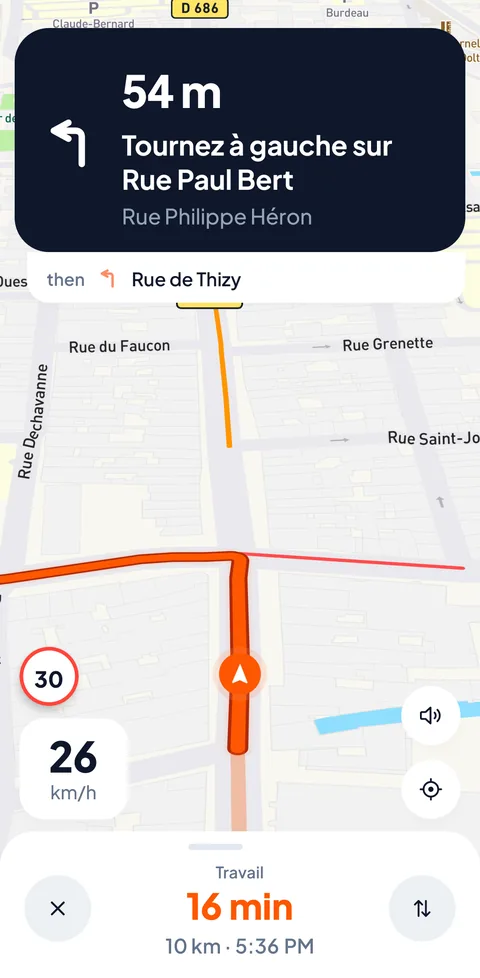
TacTac is the first GPS entirely dedicated to license-free cars. Its navigation engine was built around one unique constraint: no route passes through a road that is forbidden or dangerous for a license-free car.
Automatic road filtering
TacTac uses a routing engine whose cost profile natively excludes all motorways, expressways, ring roads classified as fast roads, and roads where the minimum speed exceeds 45 km/h. Nothing to configure: every route is compatible with your license-free car.
Routes optimised for 45 km/h
TacTac takes your license-free car’s actual speed into account for reliable arrival time estimates, not those of a car travelling at 90 km/h.
Practical tips while waiting for TacTac
- Scout your routes in advance on a computer using Street View
- Learn the signs: a round blue sign with a white car indicates an expressway forbidden to license-free cars
- Talk to other drivers: Facebook groups dedicated to license-free cars are full of local route tips
- If you make a wrong turn: pull as far right as possible, switch on your hazard lights, and take the first exit
For an overview of driving a license-free car, see our complete guide to license-free cars in 2026.
Key takeaways
Roads forbidden to license-free cars are not a regulatory detail: they are a vital safety matter. General-purpose GPS apps ignore this reality and put drivers in danger every day. The solution requires a navigation tool designed for license-free cars, and that is the reason TacTac exists.
Sign up to the TacTac waiting list to navigate safely from launch day.