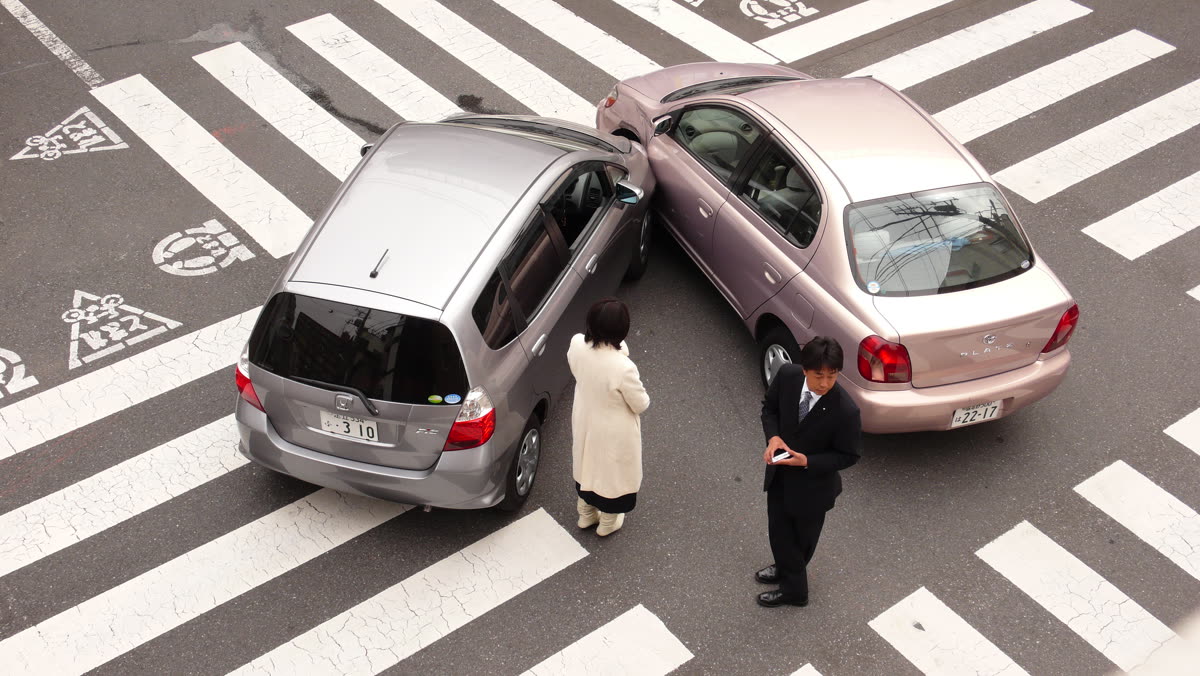
Accidents in license-free cars are rare. The 45 km/h maximum speed, mainly urban driving, and the nature of typical journeys (short trips, familiar areas) all mechanically reduce exposure to risk. But an accident can happen to anyone: a bicycle appearing suddenly, a driver running a stop sign, a poorly lit car park.
Knowing what to do in the first few minutes, and how to handle the administrative follow-up, is something you prepare for in advance. Here is the complete procedure.
Immediately after the accident: priorities
The first few minutes are the most important. In order:
Secure the area. Switch on hazard lights, then get out and place the warning triangle at least 30 metres behind the vehicle if visibility is limited. If you have a high-visibility vest in the vehicle, put it on before stepping onto the road.
Assess the injured. Start with yourself, then the other people involved. If someone is unconscious, do not move them unless there is immediate danger (fire). Call 15 (SAMU) if you suspect a serious injury, 17 (police) if traffic is disrupted or there is a dispute, 18 (fire brigade) in the event of fire or a life-threatening emergency. 112 works regardless of your mobile network.
Do not move the vehicles before photographing the scene, unless their position creates immediate danger for other road users.
What not to do
Do not verbally admit liability at the scene, even if you think you are at fault. Liability is determined during the subsequent legal and insurance process, not in the first minutes under shock. Stick to recording the facts.
The accident report: same procedure as for a normal car
A license-free car is a motor vehicle like any other as far as accidents are concerned. The accident report form (or “European accident statement”) is the standard document to complete.
How to fill it in
You and the other driver fill in the report together on a single form (in two self-copying copies):
- Left box: your information (driver, vehicle, insurance, circumstances)
- Right box: the other driver’s information
- Central diagram: representation of the collision, vehicle positions, direction arrows
- Free sketch: a drawing of the scene if the standard diagram is not sufficient
Tick all the boxes that apply in the circumstances column. Be precise but factual.
Rules to follow
Do not sign if you disagree with what is written. Once signed by both parties, the report is presumed complete. You can refuse to sign the other driver’s section if it contains information you dispute: note this in the observations section.
If the other driver refuses to fill in the report, note their registration number, make, and colour of vehicle, and the names of any witnesses. Call the police to have an official report drawn up.
Photograph: both vehicles from several angles, damage in close-up, the overall scene, tyre marks if visible, and nearby road signs.
The submission deadline
You have 5 working days to send your copy of the report to your insurer. By recorded letter with acknowledgement of receipt, or via your insurance company’s app. Do not miss this deadline: late submission can be treated as a complication and delay your compensation.
Liabilities specific to the license-free car
On this point, the license-free car is not quite like other vehicles.
If you were on a forbidden road
License-free cars cannot drive on motorways, expressways, or access-controlled roads. If an accident occurs while you were on this type of road, your liability may be engaged even if the other driver materially caused the collision.
The legal reasoning: by being on a forbidden road, you created an abnormal situation. Courts may consider that this irregular presence contributed to the accident, which reduces or even cancels your right to compensation.
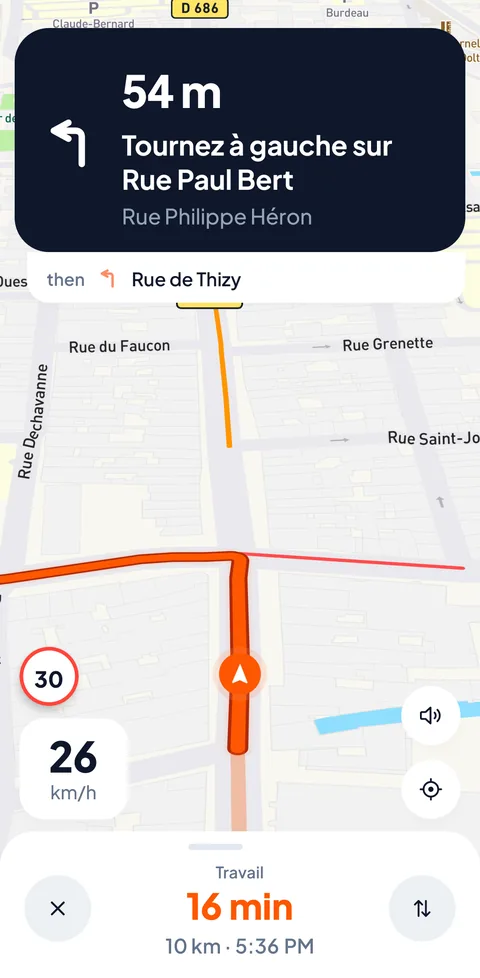
This is a further reason never to improvise routes. A GPS that automatically filters roads forbidden to license-free cars, such as TacTac, eliminates this risk by design.
The AM licence
If the driver did not hold an AM licence at the time of the accident, the insurer may refuse to cover the damage, including damage caused to third parties. The driver is then personally liable for repairs and compensation.
The insurance procedure: steps after the accident
Once the report is filled in and sent, here is what happens:
Declaration within 5 days. Send the report and attach your photos. If you have witnesses, provide their contact details. The more complete your file from the first submission, the faster the processing.
The assessment. If material damage is significant (generally above 1,500 to 2,000 euros), your insurer will appoint an assessor to evaluate the repairs. For minor damage, a repairer’s quote is often sufficient.
Compensation. In the event of shared liability, each insurer covers the corresponding share under the IRSA convention (Inter-company Agreement for Motor Claims Settlement). Average timescales run from 3 weeks for a simple case to 2 to 3 months if injuries are involved.
In the event of a dispute. If you contest your insurer’s decision, you can refer the matter to the insurance ombudsman (free of charge). If you dispute the liability attributed, legal proceedings are possible but rarely necessary for material-damage-only accidents.
Repairs after an accident: specific license-free car considerations
Not all repairs are equal on a license-free car. For structural safety components, bumpers, chassis, front or rear structure, it is strongly recommended to use a dealer or repairer approved by the manufacturer.
Generic body parts exist and are cheaper, but they do not guarantee the same resistance levels as original parts. On an already light vehicle (350 to 425 kg), the solidity of the structure after repair has a direct impact on passive safety.
Always request a written quote before giving your insurer the go-ahead. If the repair cost exceeds the vehicle’s market value (the market price at the time of the accident), your insurer may declare the vehicle a total loss and offer you a settlement at replacement value.
How to avoid the accident: the main lever
The vast majority of serious accidents involving license-free cars share a common thread: an unsuitable road. Not because the driver was speeding, they cannot exceed 45 km/h, but because 45 km/h surrounded by cars at 90 or 110 km/h creates a speed differential that even the fastest reflexes cannot compensate for.
Accidents on suitable roads (urban roads, secondary roads with moderate speeds) involve collisions at comparable speeds between the two vehicles. The consequences are incomparable with a collision on a fast road.
TacTac builds its routes by systematically excluding all roads where this speed differential constitutes a danger. Every route calculation respects the license-free car profile: no motorway, no expressway, no high-speed national road. That is not an option to activate; it is the default behaviour.
Summary
An accident in a license-free car is handled like any road accident: secure the scene, call the emergency services if necessary, complete the accident report correctly, and declare within 5 days. The specific features of license-free cars mainly concern liability in the event of a forbidden road, and the need for approved network repairs for structural components.
But the best accident procedure is the one you never need to apply. Driving on roads suited to your license-free car is the most effective decision any license-free car driver can make.
Sign up to TacTac, the GPS that calculates only routes suited to your license-free car.