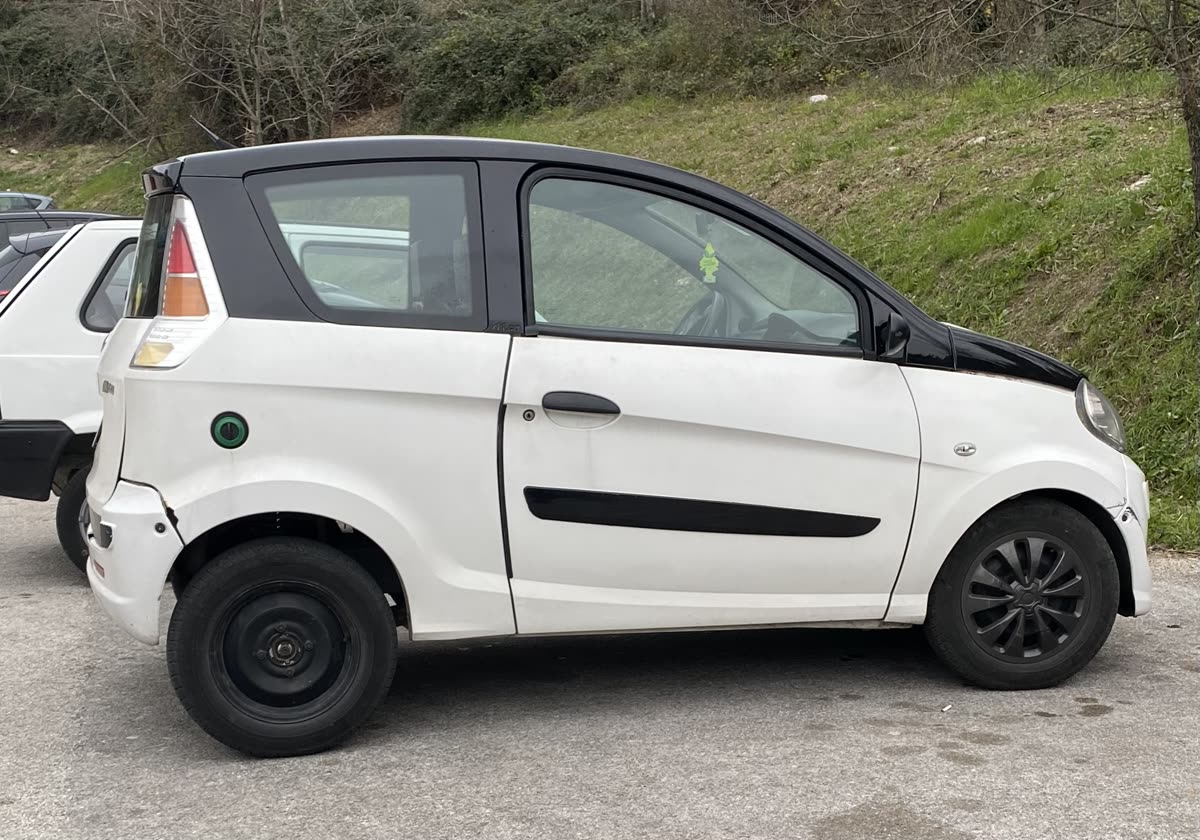
The question tends to come up around Year 9 or 10. Your teen is 14, the school bus barely reaches the lycee, there is sport in the evenings and activities at weekends. And that classmate’s license-free car looks like it solves all these problems at once.
A license-free car really can be an excellent first vehicle. It builds independence, develops a sense of responsibility, and is statistically safer than the 50 cc moped many teens would otherwise ride. But the project requires proper preparation. Here are five steps to get it right.
Step 1: The AM Licence Comes First
Before buying anything, your teen must obtain the AM licence. Driving a license-free car without it is a Road Traffic Code offence. Police can check at any time.
The Prerequisites
Your child must have passed ASSR2 (the second-level school road safety certificate), normally taken in Year 9. If they have not yet obtained it, some driving schools offer an equivalent ASR training course.
The Training
The AM licence requires 8 hours of training at an approved driving school:
- 2 hours off-road (vehicle familiarisation, manoeuvres)
- 4 hours on real roads
- 1 hour of risk awareness
- 1 hour with a parent, alongside the instructor
There is no theory exam. The instructor validates the training. The total duration may extend if the teen needs extra hours, which is rare but possible.
Cost and Timescale
Budget between 300 and 500 euros depending on the region and the driving school. Prices are unregulated, so compare several. Training typically takes 2 to 4 weeks depending on availability. Plan ahead: there is no point taking delivery of the vehicle before the AM licence is in hand.
Step 2: Choosing the Right Model
The license-free car market has expanded considerably in recent years, with models to suit every budget and every use.
Budget Under 10,000 euros
- Citroen Ami (7,990 euros), 100% electric, 75 km range, charges from a standard socket, PCP from 19.99 euros/month after deposit. The most accessible choice, virtually zero servicing.
- Fiat Topolino (7,990 euros), retro design very popular with teens, quality finish, Dolcevita convertible version available. Equivalent performance to the Ami.
- Aixam Minauto Access (9,999 euros), petrol quadricycle, dense dealer network, a good alternative if home charging is difficult to arrange.
Budget 10,000-14,000 euros
- Ligier Myli, electric, modern design, more complete equipment, better road comfort
- Microcar M.Go, petrol, robust, extensive service network, ideal for rural areas with longer daily trips
- Aixam e-City, sturdier build, better road behaviour, recommended if routes include main country roads
Electric or Petrol?
Electric: ideal in urban and suburban areas, in low-emission zones, if you have a socket at home. Running cost per kilometre is unbeatable (around 2 cents/km). Minimal servicing. Drawback: range limited to 70-90 km.
Petrol: recommended for rural areas with long daily commutes, or if home charging is not possible (flat without a garage). More regular servicing (300-500 euros/year) but greater range freedom.
Step 3: Insurance Is Compulsory and Not to Be Underestimated
Every license-free car must be insured. For a young driver aged 14-17, the premium is higher than for an adult: budget 80 to 150 euros/month depending on the level of cover, the model, and the area.
Our recommendation: go for at minimum an extended third-party policy that includes theft and fire. License-free cars, especially popular models such as the Ami and the Topolino, are frequent theft targets in some urban areas. The extra cost compared to basic third-party is often under 10 euros/month.
Contact your own insurer first: some companies offer family policies that include a teen’s license-free car on preferential terms.
Step 4: Setting Ground Rules as a Family
The freedom given to a 14-year-old must come with a clear framework, discussed and accepted together, not imposed unilaterally.
Permitted journeys: agree together on everyday trips (school, sport, close friends) and those that need prior approval. In the first few weeks, keep to familiar, repeated routes.
An absolute ban on using a phone while driving. No exceptions. Not to write, not to read, not to change the music. The GPS must be set before setting off.
Location sharing. In agreement with your teen, activate location sharing on their phone during the first few months. This is not surveillance; it is a safety net for everyone, including them.
Curfews. A fixed return time with a confirmation message on arrival. Simple, not restrictive, but it allows you to act quickly if something goes wrong.
Step 5: Equipping the License-Free Car for Safety
The license-free car leaves the factory with the essentials. A few additions further reduce risk.
A GPS Designed for License-Free Cars
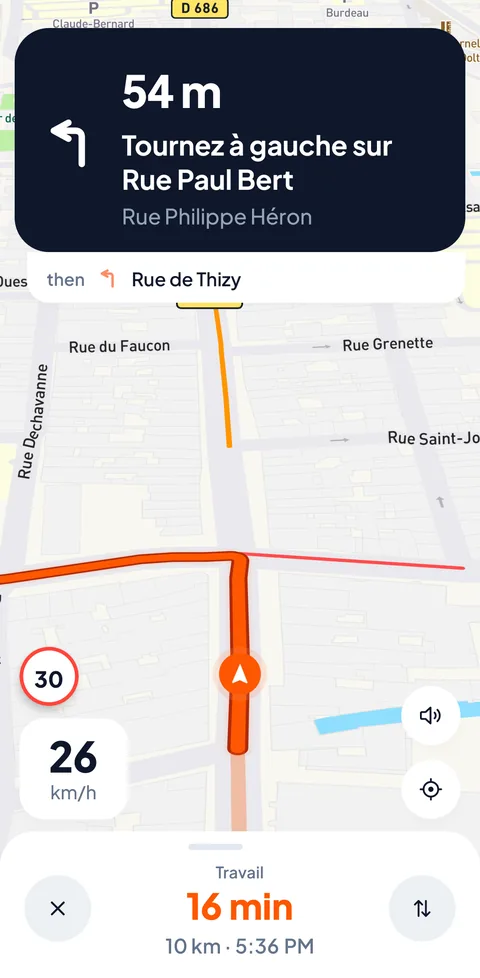
This is the most important piece of equipment. A 14-year-old following Google Maps can end up on an expressway or a ring road, roads that are forbidden to light quadricycles and extremely dangerous at 45 km/h surrounded by cars doing 110 km/h.
TacTac only calculates routes suitable for license-free cars. No complex settings: the app automatically filters out all forbidden roads. For a young driver with no road experience, it is an indispensable safety net.
A Safety Kit in the Boot
- Approved high-visibility vest
- Warning triangle
- Basic first-aid kit
None of this is compulsory for license-free cars, but it is recommended, and it costs under 30 euros.
Tyre Pressure Monitoring
An under-inflated tyre increases braking distance and destabilises the vehicle. Monthly checks are advisable, especially in winter.
Common Questions From Parents
Can they drive at night? There is no legal prohibition, but in the first few weeks it is better to keep to daytime trips. Judging distances and speed at night is different, and inexperience amplifies the risks.
Can they drive to another department? Yes, with no legal restriction. In practice, long inter-regional journeys are poorly suited to a license-free car (range, comfort, journey time). For occasional excursions, let them know in advance and make sure the route is planned with TacTac beforehand.
What about rain? License-free cars drive in rain without mechanical problems, but braking distances increase significantly. Stress the importance of a safe following distance and reduced speed on wet roads.
Conclusion
Giving your teen a license-free car means giving them real independence and trusting them. A successful project rests on serious preparation: AM licence obtained before purchase, a model matched to the budget and use case, proper insurance, clear ground rules, and a dedicated GPS so they never end up on an unsuitable road.
With these five steps in place, the license-free car is an excellent first vehicle. Safer than a moped, less expensive than a full car, and perfectly suited to a teenager’s everyday journeys.
Sign up for TacTac, the GPS that ensures your teen never ends up on a forbidden road.