License-free cars are often marketed as a universal vehicle. In practice, some contexts suit them perfectly; others less so. Before buying, or simply to make better use of your license-free car, here is an honest analysis of what it does well, what it does less well, and where it will serve you best.
License-Free Cars in the City: Their Natural Habitat
This is where a license-free car shines most. The urban configuration plays to its advantage on almost every measure.
The Footprint: A Decisive Advantage
A license-free car averages 2.50 to 2.80 m in length and 1.30 to 1.40 m in width. That is significantly smaller than a compact city car (3.70 m for a Renault Twingo). Practical consequences:
- Easy parking: tight bays, half-spaces, gaps between two cars, a license-free car squeezes in where a standard car hesitates. In central Paris or Lyon, this is a considerable advantage.
- Manoeuvrability: parallel parking, three-point turns in narrow lanes, the license-free car moves with agility that is impossible for a saloon.
- Circulation in narrow streets: some historic districts (central Nantes, old Lyon, medieval lanes) have streets that standard cars struggle to navigate. A license-free car moves through them without difficulty.
The Top Speed: Not a Problem in Town
License-free cars are limited to 45 km/h. In town, the standard limit is 50 km/h, and in practice, with congestion, traffic lights, and deliveries, the average speed of a car in city traffic during peak hours is often below 20 km/h in Paris, Lyon, or Marseille.
The license-free car suffers no speed disadvantage on these journeys. It is just as fast, sometimes faster, thanks to its parking options and compact size.
Low-Emission Zones: License-Free Cars Are Not Affected in the Same Way
Low-emission zones (ZFE), which prohibit certain vehicles from circulating based on their Crit’Air sticker, do not apply to license-free cars in the same way as to standard cars. The L6e category generally receives the most favourable stickers (Crit’Air 1 for recent models, Crit’Air 2 for older ones). Electric license-free cars carry no sticker or display the zero-emission sticker.
In practice, in cities that impose ZFE restrictions (Paris, Lyon, Strasbourg, Grenoble, etc.), drivers of recent license-free cars can circulate without constraint.
Short Journeys: Ideal
Most daily urban journeys cover less than 15 km. This is precisely the profile that license-free cars are designed for. Their range (around 200-250 km for petrol models, 80-100 km for electric models under optimal conditions) is more than enough for several days of urban use without refuelling or recharging.
License-Free Cars in the Countryside: Compromises to Anticipate
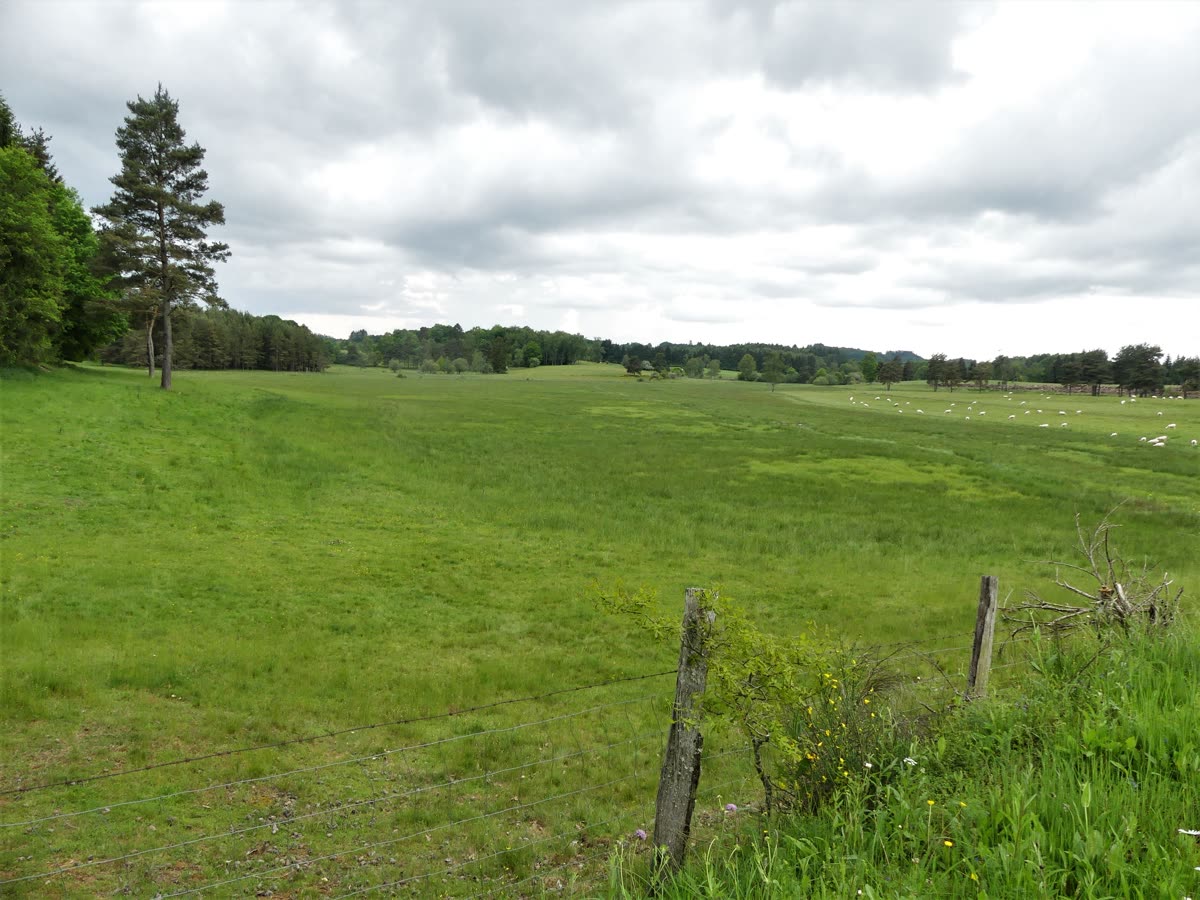
The countryside presents a different picture. A license-free car can be used there, but conditions are less favourable.
80 km/h Roads: The Central Problem
Since 2018, the general speed limit on undivided two-lane roads has been 80 km/h. A license-free car doing 45 km/h on a national road with an 80 km/h limit creates a 35 km/h speed differential, which translates into frequent and often abrupt overtaking manoeuvres.
In terms of safety, this is not forbidden (unlike motorways and expressways), but it is uncomfortable and carries real risk when visibility is poor. Drivers overtaking you at 80 km/h sometimes spot you late. Lorries and agricultural tractors add another dimension to the risk.
In terms of journey time, a 40 km distance in a rural area, which is a normal town-to-countryside commute, takes around 53 minutes at 45 km/h versus 30 minutes at 80 km/h. Over long rural distances, a license-free car more than doubles journey times.
A Thinner Service Network
If you break down or have an accident in a rural area, license-free car dealers (Aixam, Ligier, Microcar, Chatenet) have distribution networks concentrated mainly in medium-sized towns and peri-urban zones. A breakdown recovery truck may deliver you to a repairer 60 km away, which is a major inconvenience when you are in the middle of the countryside.
Longer Distances
Rural life means greater distances between points of interest. A 25 km one-way commute (50 km return) is common in rural areas. At 45 km/h, that is 33 minutes each way, over an hour a day, every day. For many rural drivers, this is a dealbreaker.
For electric license-free cars, limited range can also be an issue: 80-100 km in real-world conditions means a 50 km daily return trip leaves little margin, especially in winter when cold reduces battery efficiency.
The Positives in Rural Areas
Not everything is negative. In the countryside, license-free cars excel on:
- Small local roads (D-roads, vineyard tracks, forest paths) where actual speeds are low
- Short trips to nearby villages (bakery, doctor, market), short distances on lightly used roads
- Tourist villages in summer where cars are parked awkwardly and lanes are congested
Peri-Urban Areas: The Best Compromise
If you are looking for the environment where a license-free car offers the best balance of advantages and drawbacks, it is the peri-urban zone: the residential belts around cities, suburban municipalities, and residential estate areas.
Why It Works Well
The road network is favourable. Secondary roads and local lanes have limits of 50-70 km/h. 80 km/h roads exist but are less systematic than in open countryside. It is often possible to reach the city centre or a retail area without ever exceeding 50 km/h.
Distances are reasonable. A typical peri-urban journey covers 8 to 18 km, which is ideal for a license-free car.
Amenities are accessible. Peri-urban zones often concentrate retail parks, medical centres, schools, and public transport links. Everything you need day to day is within reach.
Traffic flows freely outside peak hours. Beyond the 7.30-9.00 and 17.00-19.00 windows, peri-urban roads carry little traffic, and a license-free car moves through them without difficulty.
Areas to Actively Avoid
Certain geographical configurations should be systematically avoided in a license-free car:
- High-traffic national roads at 80 km/h: risk of abrupt overtaking, especially from heavy goods vehicles
- Peripheral industrial estates with access-controlled zone entrances (some are expressways in practice)
- Wide dual-carriageway suburban arteries: even without an “expressway” sign, traffic at 80-90 km/h makes you vulnerable
- Roads with no verge or cycle lane on which you cannot pull aside when traffic is heavy
How GPS and Navigation Change the Game
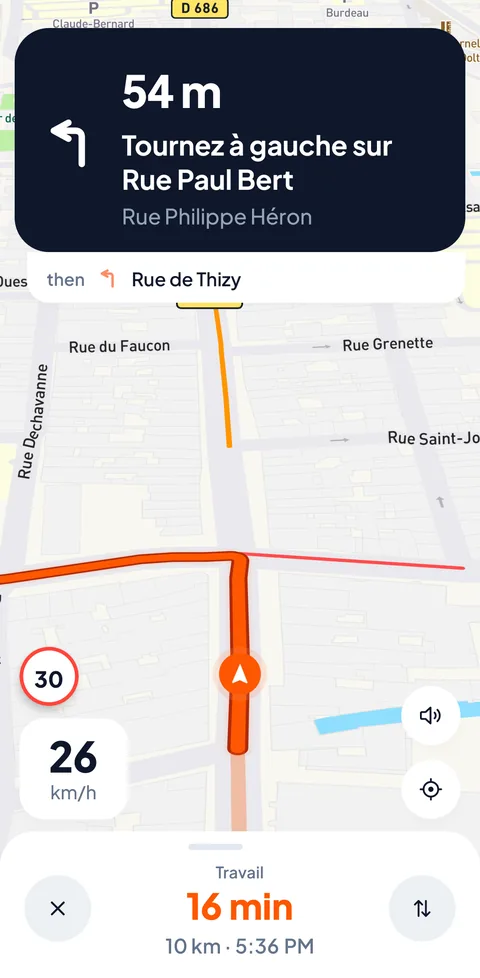
One concrete difficulty with a license-free car outside urban areas is navigation. A standard GPS does not know your constraints; it sends you on the fastest route, which is often the most dangerous for you.
TacTac was designed to solve exactly this problem: the routes it suggests take your license-free car profile into account, automatically exclude incompatible roads (expressways, roads with excessively high minimum speeds), and calculate realistic journey times at 45 km/h.
Whether you are in town, on the outskirts, or travelling towards a more rural area, you get navigation matched to your vehicle, not to a car that travels twice as fast.
Join the TacTac waiting list and navigate with a GPS built for license-free cars.