In 2018, almost every major license-free car brand offered a diesel version. By 2026, finding a new diesel license-free car has become nearly impossible. What happened? And if you come across a used diesel model, should you buy it? This guide unpacks everything.
The 2026 Situation: Diesel License-Free Cars Have Almost Vanished
The petrol-engined license-free car market now dominates. New European Euro 6d emissions standards have made diesel economically unviable for small license-free car manufacturers: developing and certifying a 500 cc diesel engine to current standards costs millions of euros that sales volumes cannot recoup.
The result: Aixam, Ligier, Microcar, and their competitors gradually dropped diesel versions on new models between 2020 and 2023. By 2026, no new diesel license-free car is available from the major French manufacturers. The used market is the only way to access these engines.
Technical Background: How They Work
Thermal license-free cars, whether diesel or petrol, use small single-cylinder engines (typically 305 to 505 cc). These engines are designed to run at a constant speed over long periods, which fundamentally distinguishes them from standard car engines.
The transmission is almost universally a CVT (continuously variable automatic transmission), no manual gearbox, no gear lever. The clutch is automatic.
The Advantages of Diesel License-Free Cars (and Why They Were Popular)
Low-End Torque
Diesel license-free car engines, mainly Lombardini diesel units (Aixam, Microcar) or Yanmar blocks, develop maximum torque from low revs. On hilly terrain, on climbs, or with a passenger on board, the difference over petrol is noticeable: the diesel climbs smoothly, without straining.
For people living in rural areas with gradients, this was a real practical advantage.
Fuel Consumption
A diesel license-free car engine consumes around 2.8-3.2 L/100 km versus 3.5-4.5 L/100 km for an equivalent petrol. Over 8,000 km a year, that represents a saving of 50-80 euros depending on pump prices. Not revolutionary, but real.
Longevity
Diesel license-free car engines, Lombardini units above all, are known for their durability. Diesel Microcar M.Go or Aixam diesel models from 2010-2015 can exceed 120,000-150,000 km with proper servicing. Petrol license-free car engines, by comparison, have an estimated lifespan of 80,000-100,000 km.
For someone who covers significant mileage (over 8,000 km/year), diesel therefore made real economic sense over the long term.
The Drawbacks of Diesel License-Free Cars
Cold-Weather Starting
This is the most concrete drawback. At temperatures below 5 degrees C, diesel license-free car engines need a longer pre-heating procedure than petrol engines. In severe cold (below minus 5 degrees C), some models refuse to start without assistance, requiring glow plug checks and winter-grade oil as mandatory.
For someone starting their license-free car at 7 a.m. in January in the Vosges, this is a daily constraint.
Low-Emission Zones and Crit’Air Stickers
Pre-2011 diesel license-free cars are classified Crit’Air 3 or 4. In the low-emission zones (ZFE) covering Paris (Greater Paris), Lyon, Marseille, Bordeaux, Strasbourg, and around fifteen other conurbations, Crit’Air 3 is already restricted or banned on certain days. In 2026, regulatory pressure is only increasing.
Buying a diesel license-free car for urban use in these zones means creating constraints for yourself now and probable outright bans within 2-3 years.
More Complex Servicing
A diesel license-free car engine requires an oil change every 5,000 km (versus 7,500-10,000 km for some modern petrol engines). The diesel filter clogs faster in low-speed urban use. On more recent models (2015-2019), a particulate filter may be present; clogging from short-distance use is a classic and costly problem.
Higher Used Prices
Paradoxically, diesel license-free cars in good condition often sell for 500-1,500 euros more than comparable petrol models on the used market, due to their reputation for longevity. This premium can wipe out the fuel saving over 5 years.
Petrol License-Free Car Engines in 2026
The Current Standard
All new thermal license-free cars are now fitted with petrol engines. Displacements vary by brand:
- Rotax 600cc (Chatenet): relatively torquey for the category
- Daihatsu/Ligier petrol 479cc: popular in Ligier and derivatives
- Kohler/Lombardini petrol 505cc: used by Aixam and Microcar
These units consume between 3.5 and 4.5 L/100 km depending on terrain and load. They start easily in cold weather, are simpler to service, and comply with Euro 6 standards.
What Has Changed With New Generations
The latest-generation petrol license-free car engines (2021 and later) have benefited from updates to injection and electronic engine management. Fuel consumption has dropped, and so have emissions. The gap with diesel has narrowed.
Comparison: Diesel vs Petrol in Practice
| Criterion | Diesel license-free car | Petrol license-free car |
|---|---|---|
| Fuel consumption | 2.8-3.2 L/100 km | 3.5-4.5 L/100 km |
| Torque / hill climbing | Very good | Adequate |
| Cold-weather starting | Difficult below 5 degrees C | No problem |
| Engine longevity | 120,000-150,000 km | 80,000-100,000 km |
| Servicing | More frequent, more complex | Simpler |
| Crit’Air (older models) | 3 or 4 | 1 or 2 |
| New availability | Not available | Standard |
| Used price | Slightly higher | Standard |
Should You Buy a Used Diesel License-Free Car in 2026?
The answer depends on your geographical situation and use.
Yes if:
- You live in a rural area with no low-emission zone within 50 km
- You cover more than 8,000-10,000 km/year
- The vehicle has a complete service history and under 80,000 km
- You have an accessible diesel license-free car mechanic in your area
No if:
- You live in or regularly travel through a conurbation with a low-emission zone
- You use your license-free car mainly for short urban trips (under 5 km)
- The model in question has no clear service history
- You want to avoid the complexity of winter starting
Our Recommendation for 2026
To be direct: diesel license-free cars have no commercial future. No manufacturer is developing new diesel models, regulations are moving in the opposite direction, and low-emission zones are multiplying.
If you are buying new or nearly new, petrol is the rational choice for any ordinary use. If you are buying used and come across a well-maintained diesel in a non-low-emission-zone area, the opportunity can be justified, but go in with your eyes open about the constraints.
And if fuel consumption is your main criterion, electric eliminates the debate entirely: 2 euros of charging for 100 km, versus 4-6 euros of petrol or diesel for the same distance.
The Next Step: Navigating Properly
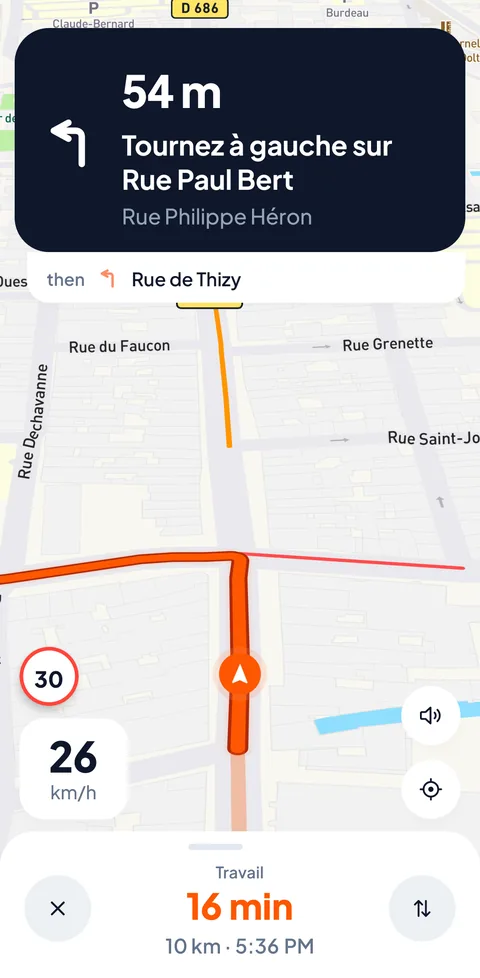
Whatever your engine, used diesel or new petrol, your license-free car remains subject to the same road restrictions. And Google Maps will keep offering you shortcuts via expressways where you have no right to travel.
TacTac is the GPS that understands the constraints of license-free cars. It filters out roads inaccessible to license-free cars, suggests routes suited to 45 km/h, and adapts to all petrol and electric models. Also read our complete license-free car guide 2026 to learn everything about the license-free car world.
Join the TacTac waiting list and drive on the right roads, diesel or not.