Your light quadricycle may have an urban expiry date
Buying a licence-free car is often a city choice: park anywhere, skip public transport, drive without a category B licence. That logic rests on an assumption nobody checks, namely that the vehicle will still be allowed into the town centre ten years from now.
The official timetables tell another story. Several European cities have already published, year by year and Euro standard by Euro standard, the date on which each type of light quadricycle stops being admitted. Those deadlines are written down, dated, and some are already enforced.
Brussels, the most explicit timetable in Europe
The Brussels low emission zone is the best documented on the continent on this point, because its official timetable carries a dedicated panel titled Moto (L6-L7). Categories L6 and L7 are precisely those of quadricycles, which is where licence-free cars sit.
Since 1 January 2026, Euro 5 diesels and Euro 2 petrol vehicles have been barred from the zone, two-wheelers and quadricycles included. Fines of 350 euros have applied since 1 July 2026, after a warning phase by post.
The timetable runs well beyond 2026:
| Quadricycle engine type | Banned from |
|---|---|
| Diesel, every Euro standard | 2026, no exception through to 2036 |
| Petrol with no Euro standard | 2028 |
| Petrol Euro 4 | 2030 |
| Petrol Euro 5 and Euro 5+ | 2035 |
A word on the first row, because it is blunt: no Euro standard saves a diesel quadricycle in Brussels. Not Euro 4, not Euro 5, not Euro 5+. The line is struck through across the whole length of the published timetable.
The 50cc mopeds go out even earlier
The same Brussels timetable carries a second panel, Mobylette et scooter (L1-L2), which covers 50cc mopeds. Their deadlines fall closer than those of quadricycles.
Diesel is banned there from 2026, whatever the standard. Petrol below Euro 5 goes out in 2028, and Euro 5 along with Euro 5+ in 2030. Put another way, a recent petrol 50cc moped loses access to Brussels five years before a petrol quadricycle of equivalent standard.
Milan applies the same principle, with a 2026 postponement
Area B and Area C handle quadricycles in the motoveicoli e ciclomotori category, and the municipal page names them explicitly. Both zones run an identical timetable.
| Deadline | Vehicles banned |
|---|---|
| In force | Two-stroke Euro 0 and 1; diesel Euro 0 and 1 |
| 1 October 2027 | Two-stroke Euro 2 and 3; diesel Euro 2 and 3; four-stroke petrol Euro 0, 1 and 2 |
| 1 October 2028 | Four-stroke petrol Euro 3 |
| 1 October 2030 | Two-stroke Euro 4; diesel Euro 4 and 5 |
The 2026 change works in drivers’ favour: the city pushed back to 1 October 2027 the bans originally due earlier, through a municipal resolution of February 2026.
Hold on to that last row above all. A diesel Euro 4 or Euro 5 quadricycle is banned from Milan on 1 October 2030, while a four-stroke petrol quadricycle of the same standard stays admitted at the end of the published timetable. Since the French fleet of licence-free cars is overwhelmingly diesel, this is the deadline that touches the most owners.
In the Netherlands, the light quadricycle slips through
The Dutch case is the only one in this survey where the light quadricycle escapes the restrictions, and it comes down to a subtlety of legal classification.
An L6e there is a brommobiel. The traffic regulations provide that the rules applicable to motor vehicles apply to brommobielen in place of those for mopeds. Dutch moped zones are marked by the zonal panneau C13, which closes access to bromfietsen and snorfietsen. A brommobiel therefore falls outside its scope. Not being registered as a passenger car, it also escapes the diesel milieuzones reserved for cars.
Amsterdam confirms it in black and white in its by-law: brommobielen keep access to the zero emission zone for two-wheelers, and no exemption is needed for them.
The 50cc machines, by contrast, are squarely targeted. Amsterdam turned its zone into a zero emission zone on 1 January 2025, with a gradual phase-out: fossil-fuel mopeds first registered between 2011 and 2024 are admitted today, only those from 2018 to 2024 will be from 2028, and none at all from 2030. The Hague has banned mopeds from 2010 and earlier since December 2020, and Nijmegen has run its zone since January 2025 with an extension announced for 2028.
In Spain, everything hangs on the label
Spain does not reason in Euro standards but in environmental labels, and national regulation requires municipalities to build on that classification. Category L vehicles, which cover mopeds and light quadricycles, are explicitly classified there.
An electric quadricycle gets label 0, the most favourable in the Spanish scheme. Hybrids fall under the ECO label, Euro 3 and Euro 4 models under label C, Euro 2 under label B, and anything older receives no label at all.
In Barcelona, the zone covers more than 95 square kilometres and applies Monday to Friday from 7am to 8pm. Only vehicles without a label are banned, which for category L means models predating the Euro 2 standard, generally registered before 2003. The same threshold has applied to foreign plates since 2020.
One notable point, and it contrasts with Brussels: the official Barcelona timetable contains no deadline later than 2022. Nothing there is dated for the years ahead.
In France, the ZFE came close to disappearing
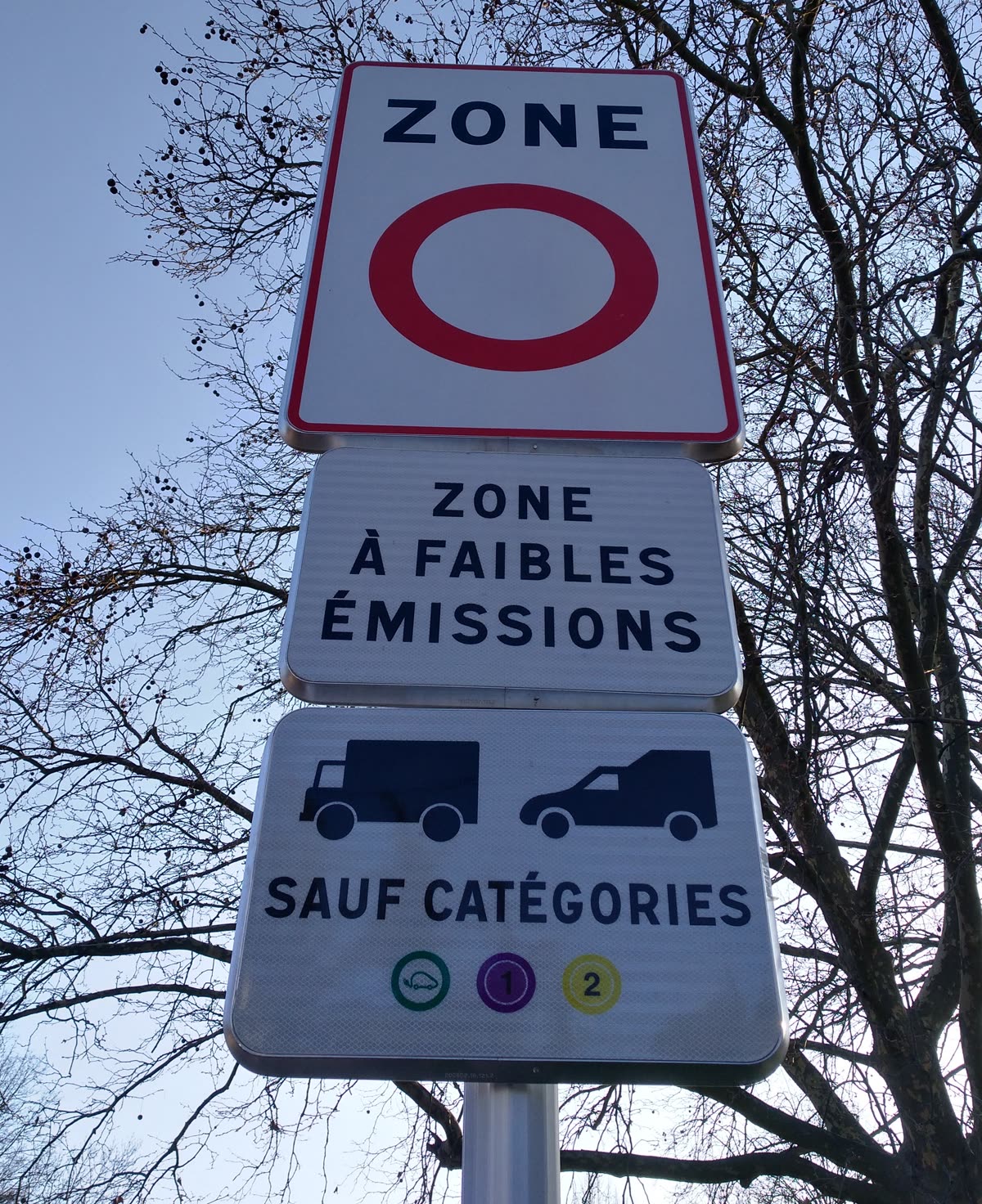
The economic simplification act, finally passed in April 2026, abolished low emission zones outright.
The Conseil constitutionnel struck that article down on 21 May 2026, in its decision n° 2026-903 DC. The ground was procedural: the article had no link, even indirect, with the original bill, what is known as a legislative rider. The Council did not rule on the substance of the scheme. French ZFE therefore remain in force.
What this changes if you buy today
A licence-free car is often kept eight to twelve years. A purchase made in 2026 therefore crosses several of the deadlines listed above.
Three lessons come out of the published timetables. Diesel is by far the most exposed engine type: shut out of Brussels already, out of Milan in 2030. Petrol has a reprieve, but it is dated and it depends on the vehicle’s Euro standard. Electric appears in none of the ban deadlines consulted, and it takes the most favourable label in Spain.
If your use is strictly local and far from any large conurbation, these timetables will probably never touch you. If it takes in Brussels, Milan or regular city driving, fuel becomes a buying criterion at least as decisive as price.
What we do not know yet
Two markets are missing from this survey, and we would rather say so than fill the gap.
Portugal first: the Lisbon municipal sites cannot be read by automated consultation, so we hold no reliable data on the status of light quadricycles in its reduced emissions zone. Madrid next: a municipal ordinance of March 2026 recasts the special protection low emission zones, but its published text did not let us establish with certainty how quadricycles and mopeds are treated.
Italian limited traffic zones outside Milan work by permit rather than by Euro standard, with highly uneven municipal rules this article does not cover. We will fill in these three points as soon as the official sources become usable.
Knowing where you are allowed to drive
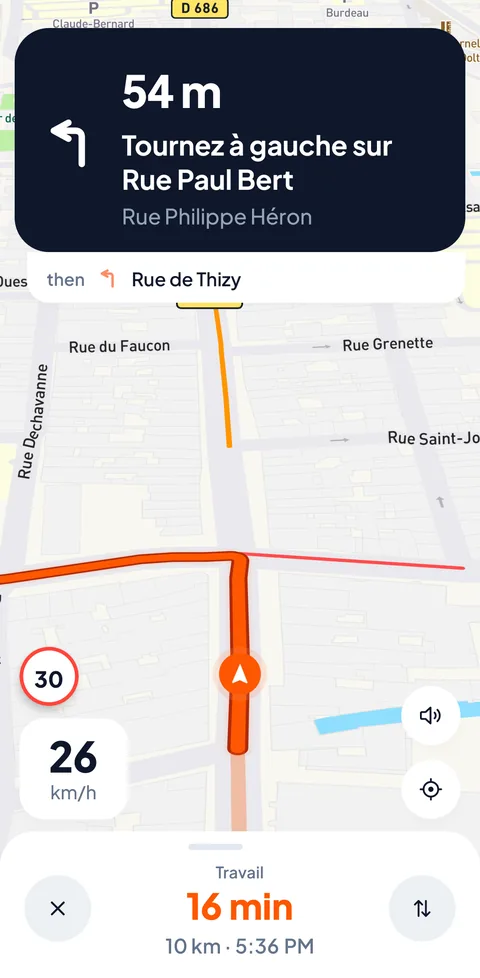
Knowing the deadlines does not tell you which road to take today. A light quadricycle and a 50cc moped remain barred from motorways and dual carriageways, whose access assumes a minimum speed beyond their reach, and mainstream satnavs keep sending their users there.
TacTac calculates filtered routes for vehicles limited to 45 km/h, across twelve European countries, with a journey time built on the real speed of the vehicle. Handy for planning a city trip or a cross-border one without discovering the ban at the moment of the fine.
Sources
Timetable of the Brussels low emission zone published on lez.brussels, panels Moto (L6-L7) and Mobylette et scooter (L1-L2), and the Bruxelles Environnement news page of 24 June 2026. Ban timetables for Area B and Area C published by the Comune di Milano, updated in June 2026. Reglement verkeersregels en verkeerstekens 1990 (articles 1, 2a and 21), the interministerial site milieuzones.nl, and the municipal by-laws of Amsterdam, The Hague and Nijmegen published in the Gemeenteblad. Real Decreto 1052/2022 and Reglamento General de Vehículos annex II.E for Spain, official pages of the Barcelona ZBE. Decision n° 2026-903 DC of the Conseil constitutionnel of 21 May 2026 for France.
Checked on 29 July 2026. These timetables are revised regularly, including in the direction of postponement: check the official page of the city concerned before travelling.